
Most people who commit to cold water immersion treat their ice bath as the centrepiece of recovery. They build the habit, dial in the temperature, track the minutes. Then they wonder why soreness lingers or performance doesn’t bounce back the way they expected.
That problem isn’t the ice bath. It’s treating one tool as a plan.
A 2025 meta-analysis of 24 studies found that cold water immersion combined with other recovery methods was nearly twice as effective as CWI alone at reducing muscle soreness. That’s a significant gap, and it points to something the ice bath recovery routine conversation routinely gets wrong: the routine that works best isn’t built around the ice bath. It’s built around a system in which the ice bath has a specific, mid-tier role.
The bigger surprise may be where CWI sits in the hierarchy. Prof Shona Halson, Deputy Director of the SPRINT Research Centre at Australian Catholic University and former Head Recovery Physiologist at the Australian Institute of Sport, puts it plainly: “Sleep is the best recovery strategy we have available” — not ice, not sauna, not compression.
The recovery pyramid: a hierarchy, not a menu
Recovery content tends to present modalities as a buffet — ice, compression, massage; pick what you like. The implication is that everything matters roughly equally.
But the evidence disagrees. A 2018 consensus statement from leading recovery researchers argued that recovery should be systematic and periodised — not a collection of nice-to-haves bolted onto training, but a structured programme where fundamentals carry the load and supplementary tools add specificity.
Halson’s work organises this into a clear hierarchy. Sleep forms the base. Nutrition sits above it. Then active and passive recovery strategies: CWI, contrast therapy, massage, compression. Higher up the pyramid, benefits become more conditional. Lower down, each layer becomes non-negotiable.
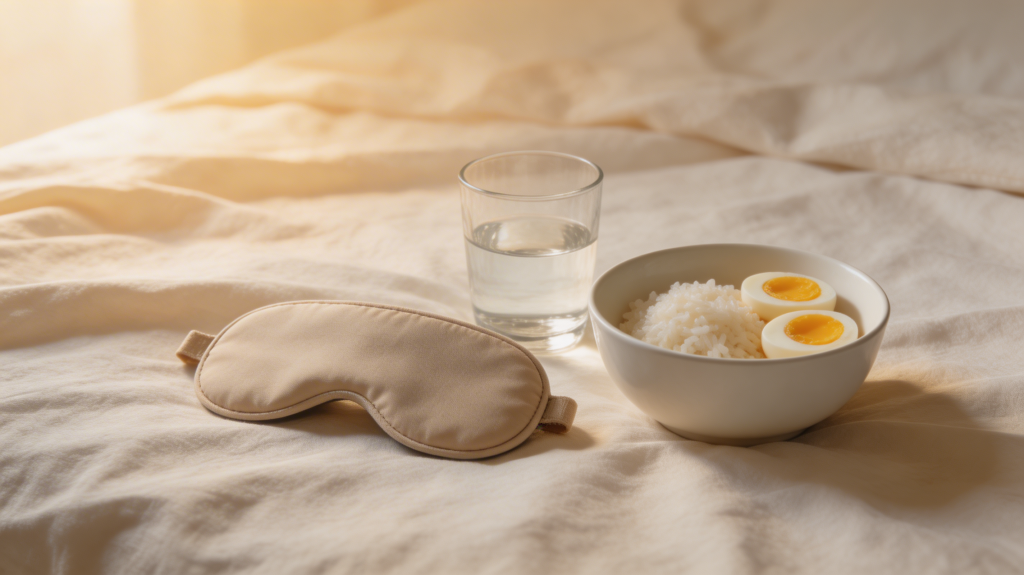
Layer one: sleep
Sleep is the least exciting recovery strategy and the most critical. Halson’s research on sleep in elite athletes catalogues what poor sleep costs: impaired muscle protein synthesis, elevated cortisol, reduced pain tolerance, slower reaction times, weakened immunity. A single night of restricted sleep can reduce time-to-exhaustion by as much as 11 per cent. Chronic sleep debt compounds these effects in ways no modality can reverse.
For the serious cold therapy user, this creates an uncomfortable audit. If you’re waking at 5am to get into an ice bath but averaging six hours of sleep, you’re spending the currency your recovery system runs on.
In practice, this means something blunt: before optimising any modality, get seven to nine hours consistently. Protect sleep onset with cool room temperatures — the irony being that cold exposure earlier in the day may help here, by accelerating the core temperature drop that triggers sleepiness. Minimise alcohol, which fragments sleep architecture even when total hours look adequate.
Layer two: nutrition
Tissue repair, glycogen resynthesis, and inflammation resolution all depend on food, not on external modalities. Adequate daily protein (1.6–2.2g per kilogram of bodyweight for active individuals), sufficient carbohydrate to replenish glycogen, and enough total energy to avoid relative energy deficiency form the substrate that everything else depends on.
What matters for the recovery stack is the sequencing insight: a post-training meal containing protein and carbohydrate, consumed within two hours of training, creates the conditions that allow downstream modalities to work more effectively. CWI applied to a body that hasn’t been fed is CWI applied to a body that lacks the substrate for repair. Cold can reduce swelling and blunt soreness perception, but it cannot synthesise muscle protein from nothing.
Eat before you obsess over temperature protocols.
Layer three: where cold water immersion actually sits
CWI is genuinely effective. The Ma et al. meta-analysis confirmed that CWI alone produced meaningful reductions in delayed-onset muscle soreness (a standardised mean difference of −0.37 compared to passive recovery). People who use ice baths recover faster than people who sit on the sofa.
But the same meta-analysis showed that CWI combined with other therapies nearly doubled the effect (SMD of −0.68). Solo CWI and stacked CWI are separated by a gap as large as the one between CWI and doing nothing.
When to use it — and when not to
CWI is most clearly indicated after competition days, high-volume training blocks, and sessions where the priority is rapid return to readiness rather than long-term adaptation. Tournament weekends, back-to-back match days, dense training camps — CWI earns its keep here.
The caveat concerns muscle growth. A 2024 meta-analysis in the European Journal of Sport Science found that regular CWI likely attenuates hypertrophy when applied after resistance training. Blunting isn’t total — gains still occur — but the signal is consistent enough to take seriously. If your primary training goal is building muscle, applying CWI immediately after every strength session may be counterproductive.
A practical rule: use CWI after high-intensity or high-volume sessions where next-day readiness matters. Skip it, or delay it by several hours, after sessions where the training stimulus itself — inflammation, satellite cell activation, protein signalling — is the point. A water temperature of 10–15°C for 10–15 minutes, applied within the first hour post-session, reflects the range most commonly validated across the literature. Periodising CWI this way separates informed use from reflexive habit.
Layer four: the supporting cast
Above CWI in the pyramid sit the supplementary modalities — conditionally useful, often pleasant, and less individually powerful than the layers below.
Massage deserves the most attention here. A 2018 meta-analysis of 99 studies by Dupuy and colleagues found it was the single most effective technique for reducing DOMS and perceived fatigue, ranking ahead of CWI, compression, and active recovery. For the home user, even 10–15 minutes of self-massage or foam rolling after a cold plunge may add meaningful benefit. If you’re choosing one thing to layer onto your ice bath, massage is the strongest evidence-based candidate.
Contrast therapy — alternating hot and cold exposure — has modest evidence for soreness reduction and may accelerate vascular pumping that supports waste clearance. For the ice bath user, adding a sauna or hot water phase is a low-friction way to extend the stack. Typical protocols alternate 1–2 minutes cold with 3–4 minutes hot across 3–4 cycles.
Compression garments show marginal benefits for soreness when worn for extended periods post-exercise; active recovery (light walking, easy cycling) supports blood flow without adding training stress. Neither rivals the layers below, but both are low-cost additions to a system that is already working.
The stack in practice
A practical recovery week for a committed ice bath user training four to five times might look like this:
Monday (heavy strength, hypertrophy focus): Post-training meal within 90 minutes. Light foam rolling. No CWI. Prioritise sleep.
Tuesday (conditioning or sport-specific session): CWI within 30 minutes of finishing (12°C, 12 minutes). Meal within the hour. Compression garments through the afternoon if accessible.
Wednesday (active recovery day): 20–30 minutes of easy movement. Contrast therapy if available (sauna alternating with cold shower, 3–4 cycles). Nutrition as normal.
Thursday (high-volume session): CWI post-session. Meal. Self-massage or foam rolling in the evening. Sleep protection.
Friday (moderate session): Post-training meal. Light movement later in the day. Sleep remains the priority.
Weekend (competition or long session Saturday, rest Sunday): CWI after Saturday’s effort. Nutrition and hydration deliberate. Sunday is genuine rest: sleep, eat, move gently.
A simple pattern emerges: sleep and nutrition are daily constants. CWI is deployed strategically, not habitually. Supporting modalities fill the gaps.
Where the system lives
One reason recovery stacking works better in some settings than others is environment. When modalities are separated by logistics — the ice bath at home, the sauna across town, the massage next week — people default to the one thing they have easy access to.
Facilities that understand this design for the full sequence. At Rekoop Flex in Singapore, private suites are built around the circuit: infrared sauna to cold plunge to compression, completed in a single visit without friction between steps. At the Meru Hotel in Bali, a simpler pairing of ice bath and dry sauna gives guests the minimum viable contrast stack within the same space. That design isn’t incidental — it’s what turns a collection of modalities into a routine people actually complete. For the home user, the same principle applies at smaller scale: reduce the friction between layers, and the stack is more likely to survive contact with daily life.

The system, not the symbol
None of this demotes the ice bath. It places it properly. CWI is a clearly effective recovery tool, and it becomes nearly twice as effective when it operates inside a system rather than as a standalone ritual. Sleep carries the load. Nutrition provides the raw material. CWI accelerates the process on the days it’s appropriate. Every other modality adds margin.
After your ice bath, the most effective next step is probably the least dramatic: eat well and go to bed.


