
You’ve probably heard the number. A 250% increase in dopamine — the statistic that launched a thousand cold plunge testimonials. But it isn’t even the most striking finding in the study it comes from. The same 2000 paper in the European Journal of Applied Physiology, by Šrámek and colleagues, measured norepinephrine too. That number was 530%. More than double the dopamine response, from the same cold water, in the same subjects, during the same immersion. Norepinephrine and cold water immersion have a relationship the wellness conversation has, for years, managed to almost entirely ignore. That bigger number got buried, and it’s the one that actually explains what you feel when you get out.
The study everyone cites, the number nobody reads
Šrámek’s protocol was straightforward: healthy subjects immersed to the neck in 14°C water for one hour, with blood samples taken before and during. Dopamine rose by roughly 250%. Norepinephrine rose by roughly 530%. Both increases were statistically significant. Both were measured in the same session.
So why did dopamine become the headline? Because dopamine is the neurotransmitter people recognise. Years of popular science writing about reward, motivation, and pleasure have made it the default explanation for why something feels good. Norepinephrine, by comparison, is pharmacologically unglamorous. It sounds clinical. It doesn’t have a Netflix documentary. But the 530% figure isn’t a footnote. It’s the dominant acute neurochemical response to cold water immersion, and it has been sitting in plain sight since the year 2000.
What norepinephrine actually does — and why the distinction matters
Dopamine and norepinephrine are closely related molecules. Norepinephrine is synthesised directly from dopamine, but they serve different functions. Dopamine is associated with motivation, reward anticipation, and the drive to pursue pleasurable outcomes. It’s the molecule that makes you want things. Norepinephrine makes you pay attention.
Its core functions are alertness, vigilance, cognitive processing speed, and attentional focus. It modulates how the brain filters signal from noise. When norepinephrine levels are elevated, you don’t feel euphoric, you feel sharp and engaged. Awake, able to concentrate without strain. Fog clears and distractions recede. There’s energy, but it’s directed, not restless.
Now consider what cold plungers actually say. Not “I feel rewarded” or “I feel pleasure.” Across our installations, from surf recovery studios to hotel spas, the language is strikingly consistent: alert, focused, clear-headed, calm but switched on. People talk about reduced brain fog and sustained focus that lasts into the afternoon. Nobody walks out of a cold plunge and says “I feel rewarded.” They say “I feel switched on.” That vocabulary, independently and repeatedly, maps to what norepinephrine does in the brain — not dopamine.
Dopamine contributes. It drives the sense of accomplishment and the positive reinforcement that keeps people returning to the water. But it’s the supporting act, not the lead.
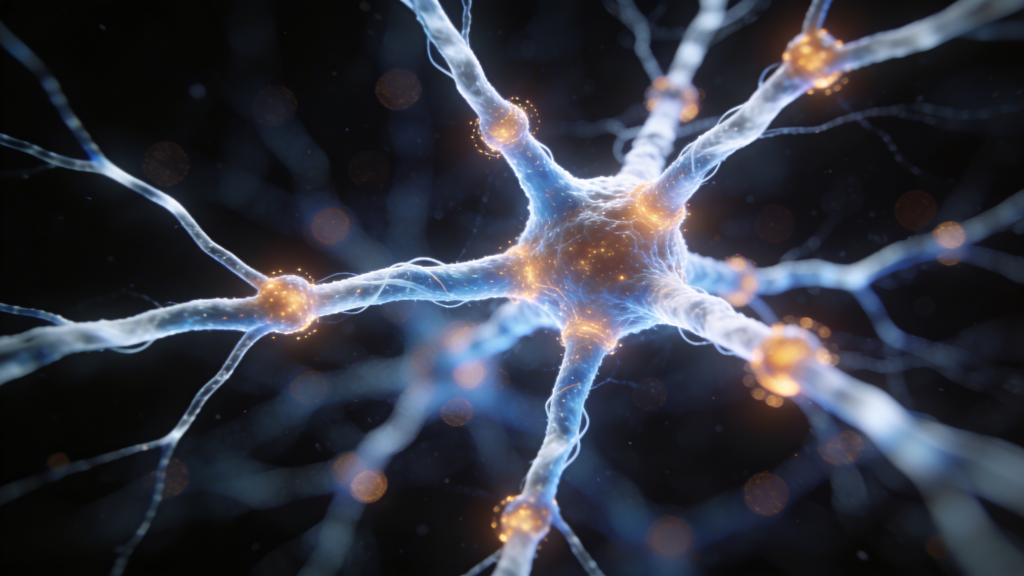
The pharmacological parallel that gives this weight
Serotonin–norepinephrine reuptake inhibitors (SNRIs) are among the most widely prescribed antidepressants in the world. They work by blocking the reuptake of serotonin and norepinephrine, increasing the availability of both molecules for neural signalling. The norepinephrine component is associated with improvements in energy, concentration, and cognitive function — the dimensions of depression that serotonin-only drugs sometimes fail to reach.
Cold water immersion produces a 530% surge in the same molecule through a different mechanism: direct sympathetic activation rather than reuptake inhibition. The pathways differ. The target is the same. A cold plunge is not an antidepressant, and nobody should treat it as a substitute for prescribed medication. But the connection is mechanistically real, not anecdotal. A 2024 clinical review in the Journal of Neuropsychiatry and Clinical Neurosciences by López-Ojeda and Bhatt frames cold water immersion within a neurohormesis model, identifying norepinephrine as a key mediator of the stress-adaptation and mood-regulation effects practitioners report. When people say cold water helps with their mental health, that connection is one of the clearest biochemical explanations for why.
The brain on cold water
Blood markers tell you what’s circulating. Brain imaging tells you what’s happening inside the skull, and it confirms the norepinephrine story.
A 2023 fMRI study by Yankouskaya and colleagues at Bournemouth University scanned participants before and after cold water immersion and found increased functional connectivity between brain networks responsible for attention control, emotion regulation, and self-regulation. Participants reported feeling more active, more alert, and more attentive.
Dr Ala Yankouskaya, the study’s lead author and a senior lecturer in psychology at Bournemouth University, put it directly: “These are the parts of the brain that control our emotions, and help us stay attentive and make decisions.” That description is not a reward signature. It is a norepinephrine signature.
One important nuance: norepinephrine circulating in the blood doesn’t cross the blood-brain barrier directly. As Dr David Puder, a psychiatrist and host of the Psychiatry & Psychotherapy Podcast, has noted, the peripheral surge and the central response follow separate routes. But the cold stimulus activates the locus coeruleus, the brain’s primary norepinephrine-producing nucleus, triggering central release through a parallel pathway. Both responses are cold-driven, and both contribute to what practitioners describe.
It doesn’t wear off
Caffeine tolerance builds within days. Most acute stress responses diminish with familiarity. The norepinephrine response to cold water does not.
A 2008 study by Leppäluoto and colleagues found that the norepinephrine response to cold water immersion did not habituate over 12 weeks of repeated exposure. Your fiftieth plunge produces a comparable neurochemical response to your fifth.
How long each session’s effect lasts matters too. Eimonte and colleagues (2021) found that norepinephrine remained elevated for up to two hours after just ten minutes of immersion at 14°C – a realistic protocol producing a sustained shift, not a brief spike that crashes the moment you’re dry. Early circadian research published in Nature in 2025 suggests timing may further modulate the noradrenaline response, though that work remains preliminary.
Non-habituating across weeks, sustained for hours per session.
What this changes practically
If the post-plunge state is norepinephrine-driven clarity rather than dopamine-driven excitement, a few things follow.
Where you recover matters. Calm alertness is best supported by quiet, well-lit spaces with minimal stimulation. Your physiology is asking for stillness, not energy — worth considering for anyone designing a post-plunge area, whether at home or in a commercial setting.
Breathwork after immersion shapes how the surge resolves. A simple box-breathing protocol supports the parasympathetic transition that channels heightened norepinephrine toward calm focus rather than jittery overstimulation. It’s the protocol we see adopted most often across our recovery studio installations, and the one practitioners say makes the difference between calm focus and restless energy. Cold gives you the raw alertness. How you breathe in the minutes after determines whether it settles as clarity or tips toward anxiety.
Temperature follows a predictable gradient: colder water produces a stronger norepinephrine response, with meaningful activation beginning around 20°C and increasing as temperatures drop toward the 10–15°C range most practitioners use. Self-reports are observational, not controlled, but the alignment between what the science predicts and what thousands of people independently describe is consistent enough to take seriously.

The reframe, crystallised
The most cited study in cold plunge culture contains two numbers. One of them — the 250% dopamine increase — became famous. The other — the 530% norepinephrine increase tells you more about what cold water actually does to your brain.
The next time you step out of cold water and notice that clean, focused alertness, the clarity that holds for hours — that’s not the dopamine. That’s the 530%, doing exactly what the science said it would.


