
Four years, a hundred iterations, and everything we have learned about keeping water cold. Properly.
By Alex, Founder of icebaths.comm
A Note from Our Founder
When I started icebaths.comm in 2022, my entire focus was on the teak. Designing an ice bath beautiful enough to belong in someone’s home. The chilling machine was an afterthought. I assumed that sourcing a reliable way to cool and clean water would be straightforward. It turned out to be one of the hardest challenges we have faced.
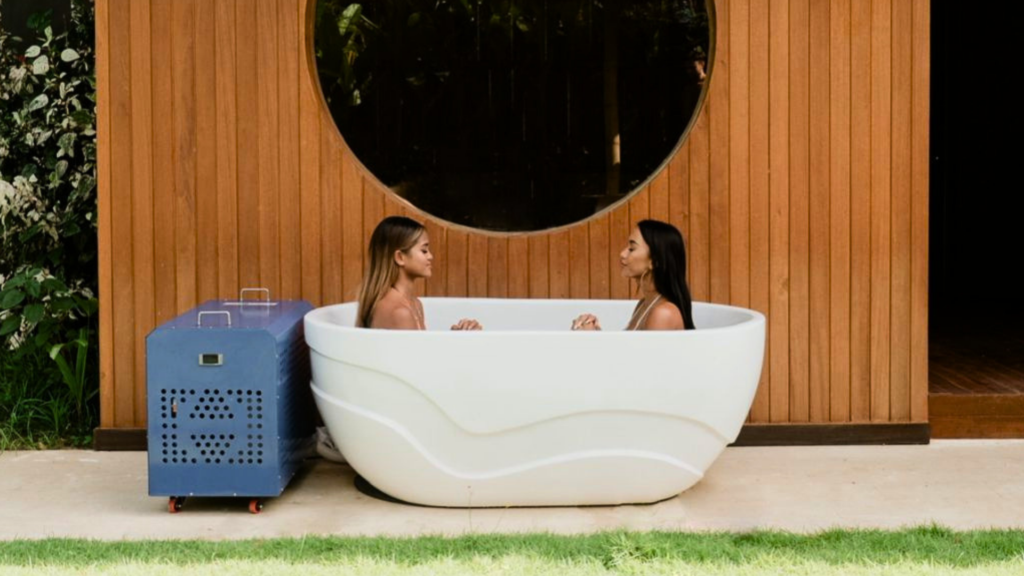
Our first chillers were imported from China. Within weeks, problems surfaced. I am not saying every Chinese-manufactured chiller is unreliable. I am saying that two machines that look identical on the outside can be vastly different in how they perform.
Since then, we have spent four years building our own. We have iterated no fewer than 100 times. Changed compressors, pumps, piping, filtration, enclosures. Everything. Along the way, we made plenty of mistakes. Each one taught us something worth sharing.
I understand that not everyone reading this has the budget for our Chilling Unit. Some of you may want to build your own as a personal project, which is a cool project. This guide is what our company has learned, distilled into a framework so you can make more informed decisions and know exactly what to ask when sourcing a chiller for your ice bath.
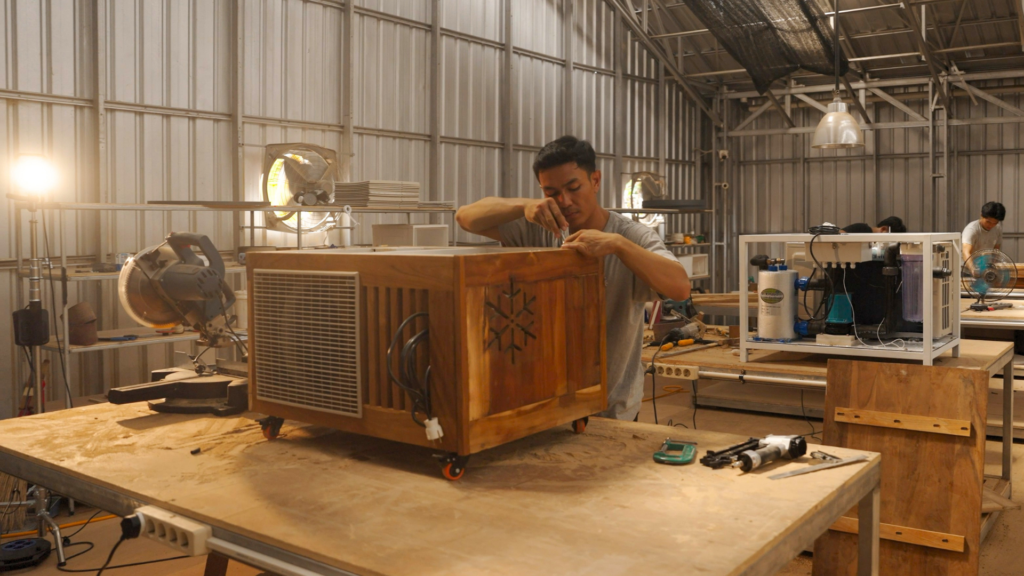
The Deceptive Simplicity of Cold Water
Cooling water for an ice bath appears uncomplicated. Circulate it through a compressor, lower the temperature, hold it there. In practice, the engineering is more complex. Flow dynamics, material integrity, the resilience of every joint and connection. All of it determines whether a chiller performs consistently or fails quietly, then expensively.
In our early days, we acquired a standard chiller from China that claimed 2HP capability. It arrived with an undersized pump. Poor flow, uneven cooling, eventual breakdown. We found leaks from substandard welding, electrical failures from inadequate protection, and pumps that could not manage air pockets. That experience prompted our shift to in-house manufacturing, where we now prioritise stable temperatures, effective filtration, and long-term dependability.
For anyone entering this market, the essential truth is this: chiller quality varies enormously. A cheaper import may appear economical at first, but the cost of repairs and downtime often exceeds the initial saving.
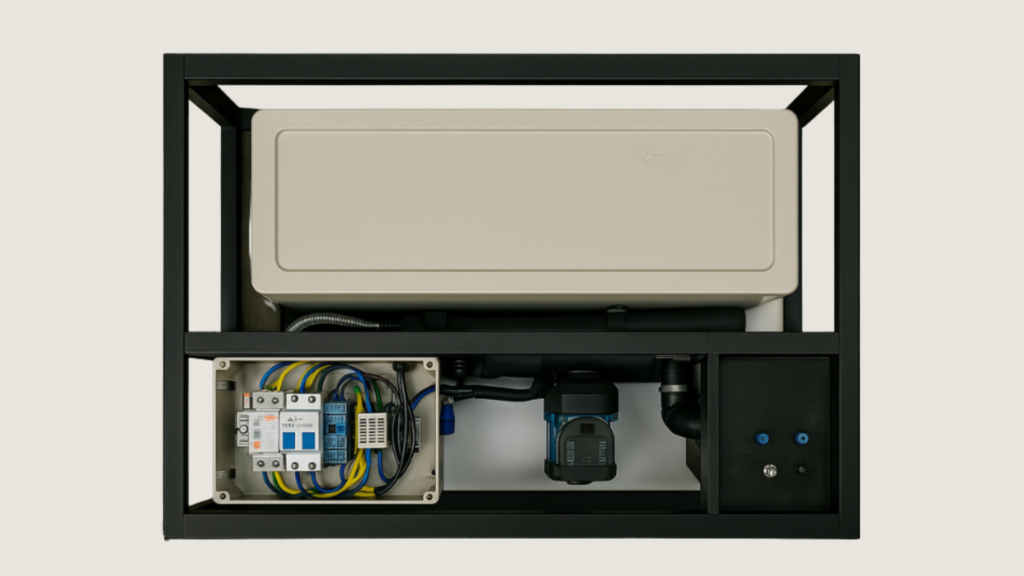
Six Things to Evaluate Before You Buy
We have distilled our learnings into six categories. Whether you are purchasing a complete chiller or building your own, these are the questions worth asking.
1. The Pump
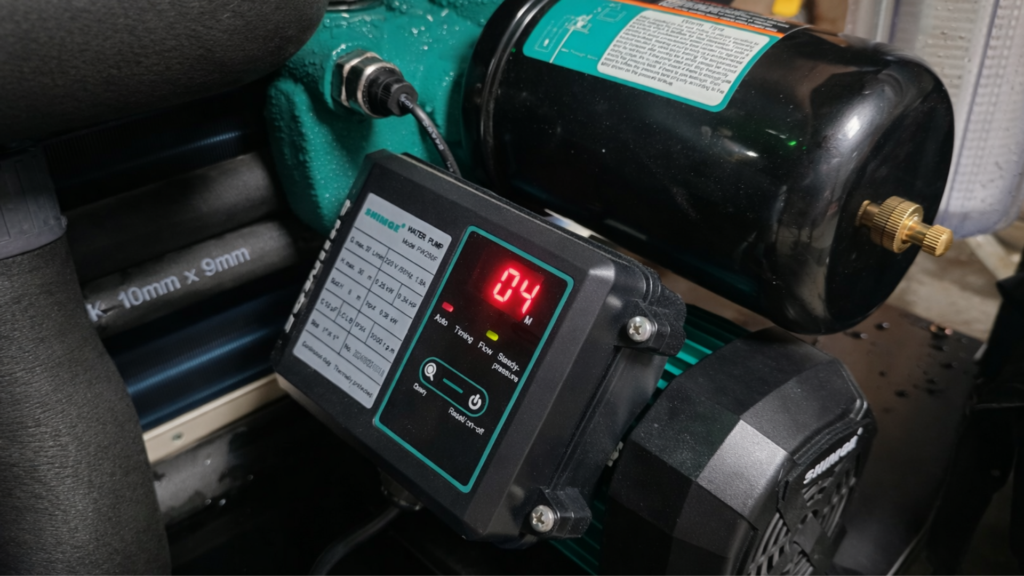
The pump is the engine of everything. It drives water through the compressor, the filter, the UV chamber, and back into the bath. A stronger pump with a higher flow rate means water is cooled and cleaned faster. Simple as that.
Here is something that surprises most people: a 1HP chiller with a powerful pump can cool water significantly faster than a 3HP chiller fitted with a small aquarium pump. Many chillers on the market use aquarium pumps because they are compact and quiet. But these pumps fail under continuous use. And they cool water painfully slowly.
If you are building from scratch, invest in your pump above almost everything else. You want a pump designed to run around the clock, not one borrowed from a fish tank.
Our Chilling Unit uses a custom Wasser pump with both suction and pressure functions, enabling it to handle air pockets without cavitation, a frequent cause of failure in imported chillers. This design circulates the entire water supply every six minutes on the Barrel and every eight minutes on the Cube. Thorough filtration. Rapid cooling. No dead spots.
When evaluating any chiller, ask for verified horsepower and flow metrics. The numbers on the listing and the numbers in reality are not always the same.
| Low Flow Rate Pump | High Flow Rate Pump | |
| Cooling Capacity | Reduces compressor efficiency by 15–30% | Maximises compressor output for faster results |
| Cleanliness | Susceptible to stagnation and sediment | Continuous circulation supports thorough filtration |
2. Cooling Power
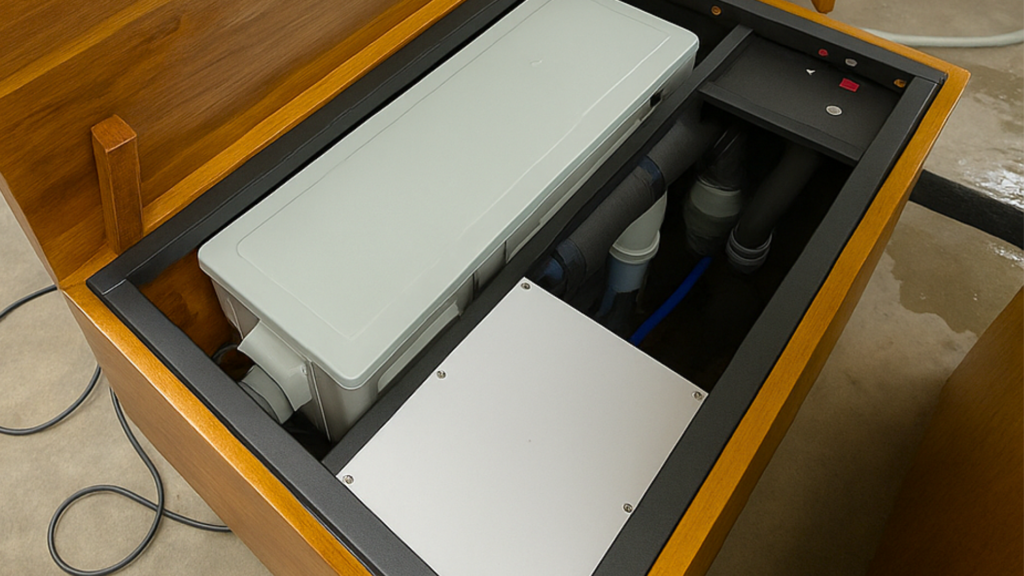
Cooling power determines how quickly a chiller can lower water temperature and hold it there. It is measured in two ways: HP, which reflects the compressor’s strength, and BTU/hr, which describes the actual energy removed from the water per hour.
The right capacity depends on several factors: the volume of water you are cooling, your target temperature, daily usage, whether the bath is insulated or exposed to sunlight, the ambient climate, and whether you use a thermal cover between sessions. All of these affect how hard the compressor works.
Our Chilling Unit runs at 1HP. Our baths hold between 400 and 600 litres. Because they are properly insulated and paired with a powerful pump, they cool water from ambient room temperature to 4°C in five hours or less.
A word of caution: be wary of chillers with less than 0.5HP of cooling capacity. In our experience, these take upwards of 24 hours to reach temperature and cannot maintain it under regular use. The pump cycles on and off far more than it should. Overheating follows. Then burnout.
3. Piping and Welding
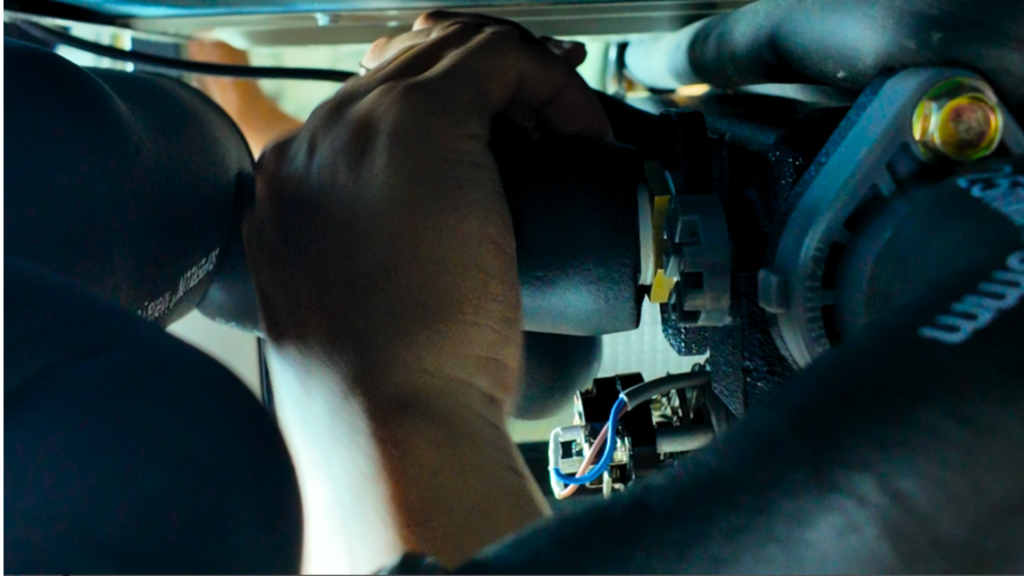
This is where many mass-produced chillers reveal their true cost. Piping configuration and weld quality directly affect flow resistance, efficiency, and durability, and they are the first things to deteriorate.
Every 90-degree bend in a pipe can increase resistance by 10–20%, reducing performance and accelerating wear. Poorly executed welds, common in mass-produced imports, corrode and fracture under thermal cycling. Over time, these small weaknesses become leaks, blockages, and costly repairs.
Our Chilling Unit uses streamlined piping with minimal bends, constructed from high-grade stainless steel. Better flow. More consistent cooling. Significantly less maintenance over the life of the product. When inspecting any chiller, look for uniform welds and linear pipe layouts. These are reliable indicators of something built to last.
4. Electronics and Water Protection
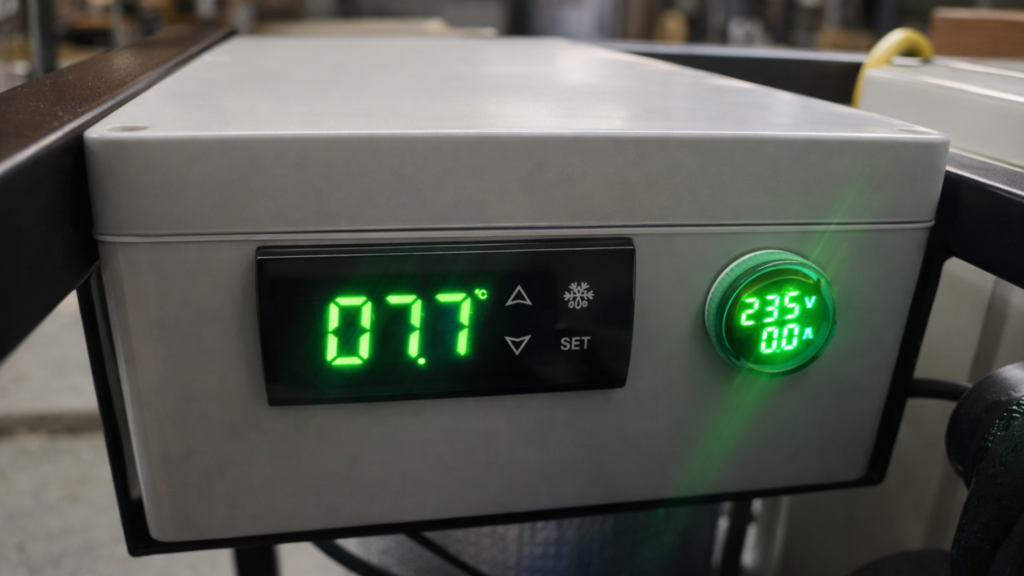
If your ice bath lives outdoors, and most do, moisture is one of the greatest risks to its electronics. Unprotected enclosures in cheaper chillers are particularly vulnerable. Shorts. Failures. Replacements that cost more than the original purchase.
Ingress Protection (IP) ratings measure this resistance. An IP65-rated enclosure withstands low-pressure water jets from any direction. An IP67-rated enclosure can survive temporary immersion in up to one metre of water for 30 minutes. Our electronics are housed in IP67-rated enclosures, validated through rigorous testing, including direct exposure to high-pressure water, without disruption.
When evaluating a chiller, ask for the IP rating of the electronic enclosure. If the answer is vague or absent, treat that as a signal.
5. Ease of Maintenance
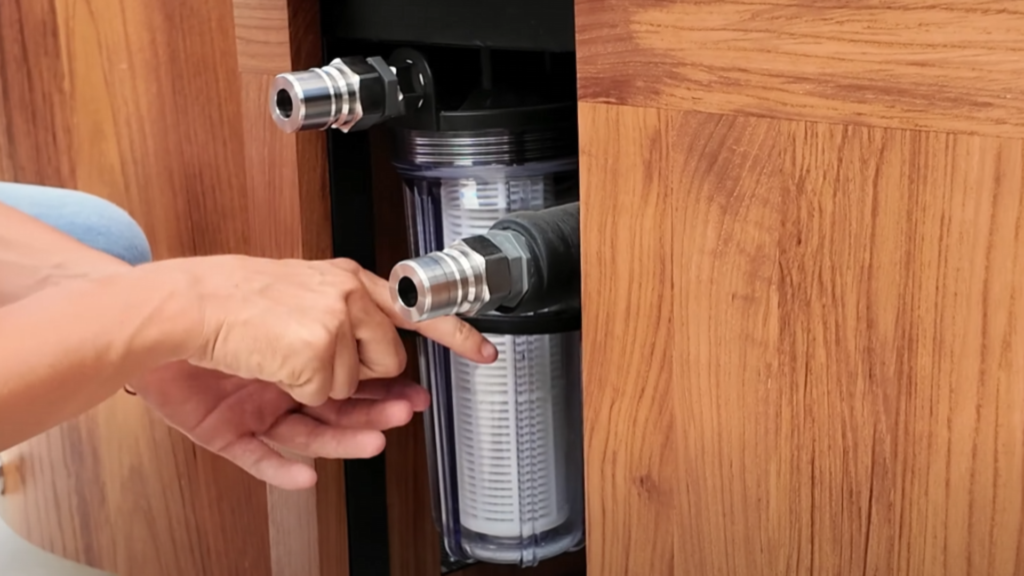
Ice baths accumulate residues: skin cells, oils, environmental debris. Filters need replacing anywhere from daily to monthly, depending on use. This is not a flaw. It is simply the reality of any water-based practice.
The question is whether your chiller makes this easy or makes it a chore. Many lower-cost models require extensive disassembly to reach the filter. That discourages upkeep. And neglected filters shorten the life of everything downstream.
Our Chilling Unit has accessible panels that allow filter changes in minutes, without specialist tools. A small design choice that reduces downtime by up to 50% and turns daily maintenance into something you barely think about. Which is exactly the point.
6. Noise

Operational noise matters more than most people expect. Particularly in a home, or in a hospitality environment where quiet is part of the experience. Standard chiller components can produce 50–70 decibels. For residential use, below 55dB is ideal. For commercial settings, under 65dB.
The challenge is that many manufacturers reduce noise by fitting weaker pumps, solving one problem while creating another. After evaluating numerous options, we integrated a custom Wasser pump that maintains its dual-function reliability while operating below 60dB. Quiet enough for a terrace at dawn. Powerful enough to run all day.
Ask for decibel ratings before purchasing. If a chiller sounds impressive in every other category but the manufacturer cannot tell you how loud it is, proceed with caution.
Final Thoughts
The chilling machine is the heart of any ice bath. It is what separates a daily practice from a daily frustration. Whether you are investing in a complete chiller or building your own, the principles remain the same: prioritise the pump, verify the cooling capacity, inspect the construction, demand proper waterproofing, ensure maintenance is simple, and check the noise.
We learned these lessons the hard way. Four years of iteration, over a hundred component changes, and a fair share of flooded workshops. If this guide saves you even one of those mistakes, it has done its job.


