Best Time to Ice Bath: The 6-Hour Rule, Seasons & Your Biology
Cold water doesn’t care what time you step in. Your biology does.
Timing your ice bath incorrectly doesn’t just waste your time; it can actively blunt your muscle gains by up to 50% or sabotage your sleep architecture for days. The difference between a plunge that fuels a 10-hour workday and one that leaves you wired at midnight comes down to three factors most guides ignore: your cortisol rhythm, your ambient climate, and your lifestyle demands.
A night-shift nurse in Chicago needs a different protocol than a digital nomad in Bali. A woman in her luteal phase responds to cold stress differently than she does mid-cycle.
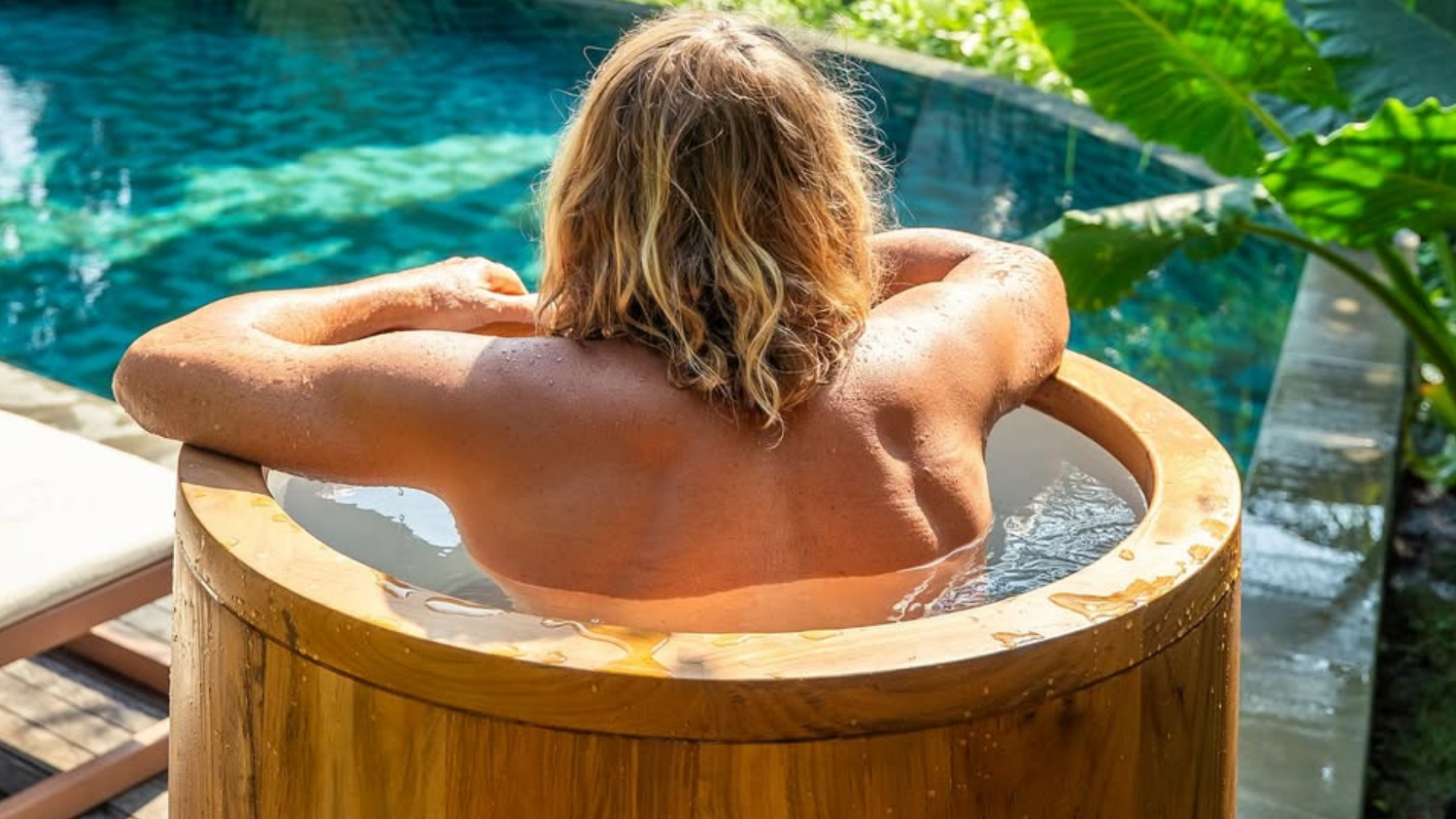
We’ve spent years refining cold exposure protocols across climates, from the humidity of Bali, where our handcrafted teak ice baths are made, to the wellness suites of luxury hotels across Southeast Asia. What we’ve learned is that the best time to ice bath isn’t universal. It’s personal.
Here’s how to find yours
Quick Answer: The Best Time to Ice Bath by Goal
The best time to ice bath depends entirely on what you’re optimizing for. Morning exposure (6–9 AM) triggers a dopamine and cortisol surge ideal for alertness. Post-workout timing requires a 6-hour buffer if muscle growth matters. Evening sessions work for sleep, but only 2–3 hours before bed.
| Your Goal | Optimal Timing | Why It Works |
| For Energy & Focus | 6 AM – 9 AM | Triggers up to 250% dopamine elevation + amplifies your Cortisol Awakening Response (CAR) for sustained alertness. |
| For Muscle Growth | 6+ Hours Post-Lift | Preserves mTOR signaling. Immediate cold exposure can blunt hypertrophy gains by up to 50% (Roberts et al., 2015). |
| For Better Sleep | 2–3 Hours Pre-Bed | Initiates “Thermal Rebound”—the rapid core temperature drop that triggers melatonin release. |
| For Fat Loss | Fasted Morning | Maximizes Brown Adipose Tissue (BAT) activation by forcing your body to burn stored fat for heat (Søeberg et al., 2021). |
Key Insight: Each timing slot aligns with a specific physiological mechanism. The sections below explain the science and how to adjust based on your climate, lifestyle, and biology.
The Core Science: Why Timing is a Precision Tool
Understanding the best time to ice bath requires knowing how your body’s biochemical rhythms work. Cold exposure amplifies or disrupts existing hormonal patterns depending on when you apply the stress. Three mechanisms matter most: the Dopamine Window, the Cortisol Awakening Response, and the Thermal Delta.

The Dopamine Window: Your Morning Chemical Advantage
Cold water triggers a dopamine release that outperforms most stimulants and lasts longer than any espresso.
A landmark study in the European Journal of Applied Physiology (Šrámek et al., 2000) found that cold water immersion at 14°C (57°F) increased plasma dopamine concentrations by 250% and norepinephrine by 530%. Unlike caffeine’s spike-and-crash pattern, this is a “chemical slow-drip” that maintains steady alertness for 3–5 hours post-exposure.
The practical application: if your workday peaks between 9 AM and 1 PM, a 6:30 AM ice bath positions your dopamine elevation precisely when you need it. You’re not borrowing energy from later, you’re manufacturing it on schedule.
Protocol Note: Dr. Susanna Søeberg’s research on deliberate cold exposure suggests 11 minutes of total weekly cold exposure, divided across 2–4 sessions, delivers meaningful metabolic and mood benefits. That’s roughly 2–3 minutes per session.
The Cortisol Awakening Response: Riding Your Natural Spike
The Cortisol Awakening Response (CAR) is the 38–75% surge in cortisol occurring within 30–45 minutes of waking that prepares your body for the day’s demands (Clow et al., 2004).
CAR peaks between 6–8 AM for most people, then gradually declines. Morning ice baths amplify CAR rather than competing with it, creating a stronger “wake signal” that prevents mid-afternoon energy collapse. Evening cold exposure can inappropriately elevate cortisol when your body expects decline—disrupting sleep.
Chronotype Adjustment: Research shows morning types (“larks”) have a larger CAR than evening types (“owls”). If you’re a night owl, your CAR peaks later (8–9 AM). Match your plunge to your wake time, not someone else’s schedule.
The Thermal Delta: Why Location Changes Everything
The intensity of a cold immersion practice is determined by the “Thermal Delta,” the differential between ambient air and water temperature. Research indicates that the magnitude of the body’s physiological response is directly proportional to the rate of skin temperature reduction(Tipton, 1989).
- Moderate Delta: A 50°F (10°C) bath in 30°F (−1°C) air creates a 20°F differential.
- Acute Delta: In an 85°F (29°C) environment, that same water temperature creates a 35∘F delta.
The steeper gradient in tropical climates significantly amplifies the autonomic stimulus, requiring a more considered approach to exposure duration to maintain a restorative effect.
When we first installed ice baths at wellness resorts across Seminyak and Ubud, guests following “standard” 10-minute protocols experienced excessive shivering lasting over an hour. The issue wasn’t water temperature. It was the delta.
Practical Example: If your standard protocol is 10 minutes, reduce by 30–40% to 6–7 minutes in high-humidity tropical environments. The thermal stress is already amplified by your surroundings.
Seasonal & Regional Mastery: From the Arctic to the Tropics
When is the best time to take an ice bath in your climate? The answer shifts with your hemisphere, season, and humidity level.

Winter Protocol: Shiver-Induced Thermogenesis
When ambient temperatures drop below 40°F (4°C), your body activates Shiver-Induced Thermogenesis (SIT), involuntary muscle contractions that burn calories and generate heat (Haman, F., & Blondin, D. P. ,2017)
Do you even need an ice bath in winter? Yes, but for different reasons. In cold climates, a cold shower (around 15°C/59°F) can provide similar acute benefits since the Thermal Delta is already significant. However, a dedicated ice bath with a chiller providing precise temperature control ensures consistency regardless of fluctuating tap water temperatures and allows you to target specific physiological responses (dopamine elevation requires immersion below 15°C).
Winter Timing: The best time to ice bath in winter is fasted morning sessions (6–8 AM), with shorter duration (2–3 minutes) since the thermal delta is already extreme.
Summer Protocol: Pre-Cooling for Performance
In summer, the best time to do ice bath shifts to strategic pre-cooling windows.
A systematic review in BMC Medicine (Jones et al., 2012) found that pre-cooling via cold water immersion before endurance exercise in hot conditions (≥28°C) improved performance by 5.7% on average. Pre-cooling lowers core temperature, giving you a larger “thermal buffer” before overheating affects performance.
Summer Timing: Pre-activity cooling (30–45 minutes before heat exposure) or late evening recovery.
The Tropical Protocol: Lessons from Bali
In tropical climates, humidity changes everything—particularly the “After-Drop” phenomenon.
The After-Drop occurs when your core temperature continues falling for 15–30 minutes after exiting, as cold blood from extremities returns to your core. In 85°F humidity where evaporative cooling is impaired, After-Drop can trigger extended shivering lasting 60+ minutes.
PRO TIP: The Bali Protocol Based on our experience outfitting wellness resorts across Indonesia:
Duration: 3–5 minutes maximum (vs. 10–15 in temperate climates)
Temperature: 55–60°F (13–16°C)—warmer than standard
Post-session: Stay in shade, allow 20–30 minutes for After-Drop
Timing: Early morning (before 8 AM) or evening (after 6 PM)
Explore our teak ice baths designed for tropical climates
The Lifestyle Persona Match: Which One Are You?
Generic timing advice fails because it assumes everyone lives the same life. Here’s how to match the best time to ice bath to five common lifestyle patterns.

The Remote Executive: The 3 PM Brain Fog Plunge
Four hours of video calls, and your cognitive edge has dulled. A 2–3 minute ice bath between 2–4 PM triggers a dopamine reset that clears the fog. In tropical climates like Bali, this midday plunge doubles as cognitive cooling.
The Early Commuter: Pre-Drive Dopamine Hit
A 90-minute commute? A 2–3 minute ice bath 30–45 minutes before departure positions your dopamine surge precisely as you hit the road.
The Night-Shift Worker: Circadian Clock Reset
Ice bath immediately before your shift begins, not after. The cortisol and dopamine surge mimics the morning CAR response, signaling your body that “daytime” has begun.
The Manual Laborer: End-of-Day Inflammatory Relief
Ten hours of physical work generate inflammatory metabolites. Within 60 minutes of ending your shift, 10–15 minutes at 50–55°F flushes metabolic waste. Research shows cold water immersion reduces markers of muscle damage, including creatine kinase (Leeder et al., 2012, Xiao et al.., 2023).
The High-Intensity Parent: The 2-Minute Emotional Reset
Any available window. Two minutes minimum. The goal is vagal tone regulation. Cold water activates the vagus nerve, shifting your nervous system from fight-or-flight to rest-and-digest.
Performance vs. Gains: The Athlete’s Timing Conflict
For athletes, finding the best time to ice bath creates a direct conflict: immediate recovery versus long-term adaptation.
The 6-Hour Rule: Protecting Your Gains
If hypertrophy is your primary goal, wait at least 6 hours between strength training and cold exposure.
The landmark Roberts et al. (2015) study in the Journal of Physiology found post-exercise cold water immersion reduced long-term gains in muscle mass and strength compared to active recovery. Cold exposure blunts the mTOR signaling pathway responsible for muscle protein synthesis.
- Same-day strength training: Ice bath 6+ hours later, or skip entirely
- Rest days: Ice bath anytime
- Morning training: Ice bath before bed (6+ hour gap preserved)
The Endurance Exception
The 6-Hour Rule applies primarily to strength training. For runners, cyclists, and triathletes, especially in hot climates, immediate post-workout cold offers benefits that outweigh hypertrophy concerns. A meta-analysis found cold water immersion improved recovery metrics in endurance athletes (Rowsell et al., 2009), Higgins et all, 2017).
Cycle-Syncing Your Cold: A Woman’s Guide to Timing
Women’s hormonal cycles create predictable windows of cold resilience and sensitivity that most protocols ignore.
The Follicular Phase (Days 1–14): Your High-Resilience Power Zone
The Follicular Phase spans from the first day of menstruation through ovulation, characterized by rising estrogen and low progesterone.

Research shows estrogen has thermoregulatory effects; higher estrogen levels improve cold tolerance by enhancing peripheral vasoconstriction (Stachenfeld, N. S., et al., 2000). During this phase, lower baseline core temperature, reduced cortisol sensitivity, and enhanced recovery capacity.
Follicular Protocol: This is your window for challenging protocols—colder temperatures, longer durations. Days 6–14 are optimal.
The Luteal Phase (Days 15–28): When Less Is More
The Luteal Phase spans from ovulation through menstruation, characterized by elevated progesterone and higher baseline core temperature.
Progesterone raises core body temperature by 0.3–0.5°C (0.5–1°F) (Hessemer, V., & Brück, K. (1985).), making ice baths feel harder at identical water temperatures.
Luteal Protocol: Reduce duration by 30–50%. Warm water temperature by 3–5°F. Avoid evening sessions in the late luteal phase (Days 24–28).
The Period Protocol
Cold triggers pelvic vasoconstriction, which some women find reduces cramping (Garcia et al., 2020) . However, if you’re experiencing fatigue, adding cold stress may feel depleting.
Listen to your body. Brief exposure (2–3 minutes) may help with cramps. If depleted, skip entirely.
The Ultimate Decision Matrix: Find Your Perfect Time
Finding your best time to ice bath requires matching cold exposure to your goals, constraints, and biology. Use this framework to identify your starting point.
Step 1: Identify Your Primary Goal
| If You Want… | Start Here |
| Morning energy and focus | 6–8 AM, fasted |
| Post-workout recovery (endurance) | Within 60 minutes of training |
| Post-workout recovery (strength) | 6+ hours after, or rest days only |
| Better sleep | 2–3 hours before bed |
| Fat loss | Fasted morning, cold ambient temperature |
| Emotional regulation | Any window, 2 minutes minimum |
Step 2: Apply Your Constraints
| If Your Constraint Is… | Adjust To… |
| Limited morning time | Midday (2–4 PM) or evening |
| Evening workouts + hypertrophy focus | Morning ice bath OR rest days only |
| Unpredictable schedule | 2-minute protocol, any window |
| Night shift work | Pre-shift plunge |
| Tropical climate | Reduce duration 30–40%, increase water temp 3–5°F |
| Luteal phase | Reduce duration 30–50%, avoid late evening |
Step 3: Start, Track, Adjust
Commit to your chosen timing for two weeks. Track energy levels, sleep quality, and recovery perception (1–10 scale). Adjust based on data—not assumptions.
Frequently Asked Questions
What is the best time to ice bath for energy and focus?
For most people seeking energy and clarity, the best time to ice bath is 6–8 AM. This delivers the strongest return by aligning with your natural Cortisol Awakening Response and triggering a sustained dopamine elevation.
Can I take an ice bath before bed without ruining my sleep?
Yes, but finish at least 2–3 hours before bedtime. Plunging within an hour of bed almost guarantees sleep disruption due to elevated cortisol and body temperature.
How long should I wait after lifting weights to ice bath?
If hypertrophy is your priority, the best time to ice bath is at least 6 hours after training—or reserve ice baths for rest days only.
Does the best time to ice bath change by season?
Yes. Winter’s higher thermal deltas make sessions more intense—reduce duration to 2–3 minutes. Summer shifts optimal timing toward pre-activity cooling 30–45 minutes before heat exposure.
Should women adjust ice bath timing during their menstrual cycle?
Absolutely. The Follicular Phase (Days 1–14) offers peak cold tolerance. The Luteal Phase (Days 15–28) requires reduced duration and avoiding late-evening sessions.
Is it better to ice bath on an empty stomach?
For metabolic benefits, the best time to ice bath is fasted morning—this maximizes brown fat activation. For recovery, fed vs. fasted matters less.
Rewrite Your Cold Therapy
At icebaths.com/, we facilitate a more refined approach to intentional cold exposure. Having identified the optimal timing for your recovery goals, the focus now turns to the environment of your practice.

A sustainable ritual requires an ice bath that matches your commitment. Our philosophy is centered on integrity and real-world performance from our superyacht-grade teak wood ice baths, handcrafted in Bali, to the disciplined lives of the global executives and athletes who rely on them.
We invite you to move beyond the temporary and invest in a foundation built for a lifetime of recovery.
Begin your practice
Join our community on Instagram to observe the experiences of those who have integrated our protocols into their daily lives.
The Collection View our range of handcrafted teak ice baths.
The Rental Program Experience the benefits of our cold therapy systems in your own space before committing to a permanent installation.
Safety and Considerations
The insights shared here are for educational purposes, rooted in both scientific research and practical experience. They are intended to inform your practice rather than replace professional medical guidance.
Cold water immersion introduces a significant physiological stimulus to the cardiovascular and autonomic nervous systems. We recommend consulting a healthcare professional before beginning any new protocol, particularly for those with pre-existing cardiovascular conditions, Raynaud’s disease, or during pregnancy.
For your safety, please ensure your practice is always conducted in the presence of others.