
In traditional Chinese medicine, the warming energy that sustains a healthy womb is called yang qi. In Western endocrinology, the warming hormone that sustains a healthy uterine lining is called progesterone. These are not metaphors for each other. They are two descriptions of the same physiological reality, developed three thousand years apart, in languages that never had reason to speak. And they are the reason millions of women receive contradictory advice about cold womb syndrome and whether cold water therapy is safe for their bodies.
If you grew up in a household shaped by Chinese, Southeast Asian, or East Asian medical traditions, you were likely told that cold penetrates the uterus, stagnates blood, and impairs fertility. If you follow the current wave of cold therapy research, you have likely read that cold water immersion reduces anxiety, eases menstrual symptoms, and supports hormonal health. Both claims have evidence behind them. Neither is wrong in the way the other camp assumes.
We sell ice baths in Jakarta, where a significant proportion of potential clients come from backgrounds where cold exposure is considered harmful to the womb. This is not an abstract question for us. That commercial reality forced us to look harder at what each tradition actually says, and what we found was more interesting than either side’s talking points.
The real question was never whether cold is good or bad for the womb. It was always about which body, in what condition, and with what kind of cold.
What traditional Chinese medicine actually means by “cold womb”
The term 宫寒 (gōng hán) translates literally as “palace cold,” palace being the classical Chinese term for the uterus. But cold womb syndrome is not simply a temperature diagnosis. In TCM, it describes a pattern of deficiency in the warming, activating energy (yang qi) that the uterus needs to build a receptive lining, sustain regular menstruation, and support implantation.
Clinically, the picture is specific. Women with cold womb patterns typically present with delayed or irregular periods, menstrual blood that is dark or clotted, cramping that improves with warmth, cold hands and feet, lower back pain, and in some cases difficulty conceiving. A TCM practitioner diagnosing cold womb is not guessing. They are identifying a constellation of symptoms that cluster together with enough consistency to constitute a recognisable syndrome.
Treatment follows logically from the diagnosis: warm the palace. Warming foods and herbs (ginger, cinnamon bark, mugwort via moxibustion), avoidance of cold foods and environments, and sometimes acupuncture to move stagnant blood and restore yang. Cold exposure of any kind sits directly opposite the therapeutic direction.
Cold womb is not folk belief in the dismissive sense. Cold womb is a clinical framework practised by licensed physicians across East and Southeast Asia, with diagnostic criteria, a treatment logic, and a patient population numbering in the hundreds of millions.
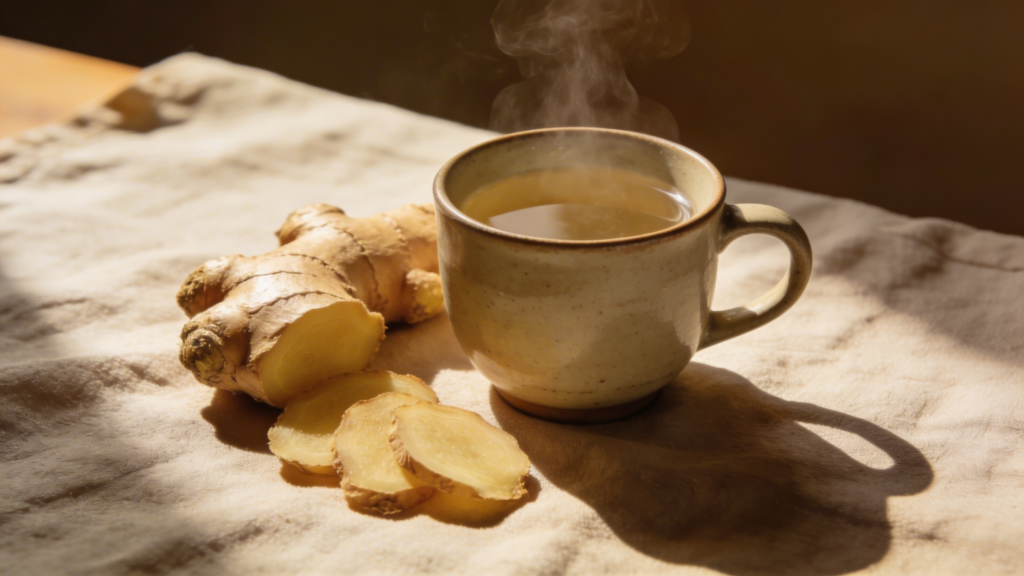
The biomedical mirror: progesterone and the warming hormone
Physician Julie Low, a Singapore-based practitioner with qualifications in both biomedical sciences and traditional Chinese medicine, has described the connection between the two traditions directly. As she explains through her practice at the Oriental Remedies Group, having a cold womb means the uterine lining is not adequately responsive to progesterone, the hormone she calls “a warming hormone that helps raise basal body temperature.”
The parallel is not loose analogy. Progesterone is literally thermogenic. After ovulation, rising progesterone levels increase a woman’s basal body temperature by 0.2–0.5°C, a shift so reliable it has been used for decades as a fertility tracking marker. When progesterone is insufficient, the post-ovulatory temperature rise is blunted or absent, the uterine lining develops poorly, menstruation may arrive early or irregularly, and implantation becomes less likely.
Symptom overlap makes the convergence visible. TCM’s cold womb: delayed or irregular periods, dark clotted menstrual blood, cold extremities, pain relieved by warmth, difficulty conceiving. Western endocrinology’s luteal phase deficiency: short or irregular cycles, spotting before periods, difficulty maintaining early pregnancy, poor endometrial development. Same physiological territory, different cartographers.
A TCM practitioner who prescribes warming herbs to tonify yang is, in biomedical terms, supporting the hormonal environment that progesterone creates. A reproductive endocrinologist who prescribes progesterone supplementation is, in TCM terms, warming the palace. At the level of mechanism, the clinical concern about cold exposure aligns far more closely across traditions than either has generally acknowledged.
What the animal research shows
If this convergence makes the cold womb concern credible, the animal research makes it impossible to dismiss.
A 2025 study published in Frontiers in Endocrinology exposed female mice to cold conditions (4°C daily immersion) and found significant disruption to reproductive function. Cold-exposed mice showed elevated levels of AMH, estradiol, FSH, and LH. Critically, the inflammatory microenvironment within reproductive tissues was altered in ways that impaired normal function.
An earlier 2018 study on female rats corroborated these findings through a different protocol: exposure to −10°C for four hours daily over two weeks, producing oestrus cycle irregularity, reduced uterine epithelium height, and altered LH levels.
Two animal models, two research groups, two protocols, the same direction of effect: chronic cold exposure disrupts female reproductive physiology.
But these mice and rats were not choosing to step into cold water for three minutes and then warming up. They were subjected to sustained, extreme, inescapable cold, day after day. In the 2025 study, mice were submerged daily to neck level at 4°C. In the 2018 study, rats endured four hours at −10°C. Both are models of chronic environmental cold stress, not brief voluntary immersion.
The distinction does not neutralise the findings — it sharpens them. Cold’s effect on reproductive tissue is real, measurable, and dose-dependent. TCM’s concern about cold penetrating the uterus has a biological basis that Western science can detect at the molecular level. And the question of dose, duration, and context is not a polite caveat but the central variable.
What TCM historically warned about, and what these studies model, is chronic environmental cold: living in cold conditions without adequate warmth, working in cold environments for extended hours, consuming cold foods habitually when the body is already in a depleted pattern. A deliberate immersion lasting one to five minutes, followed by active rewarming, performed a few times per week, is closer to exercise than to the chronic stress that concerned classical TCM physicians. The mechanism of harm demonstrated in these studies does not straightforwardly apply to the protocol most women actually use.
Which means the question shifts. Not “does cold harm the womb?” but something more specific and more useful.
What the human evidence shows
Human data on women and cold water tells a different story, though it comes with its own limitations.
In the largest women-specific study to date, a 2024 cross-sectional survey led by Professor Joyce Harper at University College London, 1,114 women who practised cold water swimming reported on their experience. Among those noting changes in menstrual symptoms, 46.7% reported reduced anxiety and 37.7% reported mood swings easing. Among menopausal women, the figures were striking. Some 46.9% reported reduced anxiety and 30.3% reported reduced hot flushes. As Harper summarised, the majority of women swim specifically to relieve symptoms such as anxiety, mood swings, and hot flushes, and a substantial proportion report success. A 2024 RCT involving 84 midlife women found similar reductions in depressive symptoms and anxiety, though the protocol combined cold showers with breathwork, making cold’s specific contribution impossible to isolate.
These are real benefits, reported by real women, but intellectual honesty requires noting the constraints. Harper’s survey is cross-sectional, not controlled. Respondents were self-selected cold water swimmers, a population already disposed to enjoy the practice. There is no way to separate the physiological effects of cold from the social, environmental, and psychological effects of outdoor swimming in a community of enthusiastic women. Those benefits may be entirely genuine. They may also be partly attributable to factors that have nothing to do with water temperature.
What the human evidence does tell us with reasonable confidence is that brief, voluntary cold water exposure does not appear to cause the kind of reproductive disruption seen in the animal studies. No human study has reported menstrual irregularity, reduced fertility, or hormonal disruption from cold water swimming or ice bath use. A 2025 scoping review on cold water swimming and pregnancy found no basis for a blanket prohibition on cold exposure for reproductive-age women.
That gap between animal evidence and human evidence is not a contradiction. The gap is a dose-response relationship. And it points toward a framework that both traditions, at their most sophisticated, already understand.
A constitution-based framework: which body, which cold
Dr Jolene Brighten, a hormone specialist and naturopathic endocrinologist, captures the correct position cleanly: “While it’s true that increased stress can elevate cortisol levels, potentially affecting progesterone production, this doesn’t justify a blanket statement against cold therapy for all women.”
No blanket prohibition holds. But neither does the blanket endorsement. Different bodies respond differently to cold, and the response depends on the woman’s current constitutional state.
When caution makes sense. If you recognise yourself in the cold womb pattern — periods that run late, menstrual blood that is dark and clotted, cramping that eases with a hot water bottle, hands and feet perpetually cold, a basal body temperature that does not rise clearly after ovulation, then your body is already signalling insufficient warming energy, or in Western terms, possible progesterone insufficiency. Adding a cold stressor to a system already struggling to generate warmth is, at minimum, counterproductive. This does not mean cold therapy is permanently off the table. It means your starting point matters, and working with a practitioner to address the underlying pattern first, whether through TCM warming protocols or Western hormonal assessment, is the more intelligent sequence.
When cold may genuinely help. If your pattern runs hot, chronic inflammation, elevated cortisol from sustained stress, symptoms consistent with conditions like PCOS where inflammatory and androgenic pathways dominate, heavy periods with bright red flow, or the vasomotor symptoms of perimenopause — then brief cold exposure may work with your physiology rather than against it. Cold water immersion’s anti-inflammatory and cortisol-modulating effects are precisely what a heat-pattern body may benefit from. Women in Harper’s survey who reported reduced hot flushes and anxiety are likely, though this has not been formally tested, skewing toward this profile.
The grey area is real. Many women will not fit neatly into either pattern, because menstrual cycles shift with stress, season, age, and life circumstance. Consider it a lens for better decision-making, not a diagnostic tool. If you are actively trying to conceive and have any doubt, the responsible step is assessment from a qualified practitioner who can evaluate your specific situation.
Practical bridges
For women in TCM-influenced cultures who are curious about cold therapy but wary of the cold womb concern, the experience itself matters as much as the evidence.
Contrast therapy offers a structural bridge. A protocol that begins with warmth (sauna, heated pool, warm shower), moves through a brief cold immersion, and returns to warmth honours the TCM principle that the body should not be left cold. Net thermal experience is warm; the cold is a controlled stimulus within a warming container. In Southeast Asian markets, hospitality operators have gravitated toward this approach, often setting the cold element at moderately cool temperatures and surrounding it with warm design and attentive service.
Cycle-phase awareness adds another layer of personalisation. Some women report that cold exposure feels invigorating during the follicular phase (the first half of the cycle, when oestrogen dominates) but draining during the luteal phase (the second half, when progesterone should be rising and the body is already working to generate warmth). This observation lacks controlled trial support, but it aligns with both TCM’s sensitivity to cyclical energy and Western endocrinology’s understanding of progesterone’s metabolic demands. Adjusting practice by cycle phase costs nothing and respects the body’s own rhythm.
And for women carrying genuine cultural concern about cold and reproductive health, setting matters. A guided first experience in a warm, private, well-designed space is a different proposition from an ice bath performed alone. Environment communicates safety in ways that information alone cannot.
Where the two traditions converge
The question was never whether cold is good or bad for the womb. That framing belongs to a world where medical traditions compete instead of converse. Both traditions, at their best, arrive at the same place: the female reproductive system responds to cold stress, the body’s capacity to generate warmth matters for fertility, and context determines whether a cold stimulus heals or harms.
The better question, the one a thoughtful TCM physician and a careful reproductive endocrinologist would both endorse, starts with the woman in front of them. What is her constitution, what is her cycle doing, and what kind of cold, for how long? That question is harder than a blanket answer. It is also the only one worth asking.


