
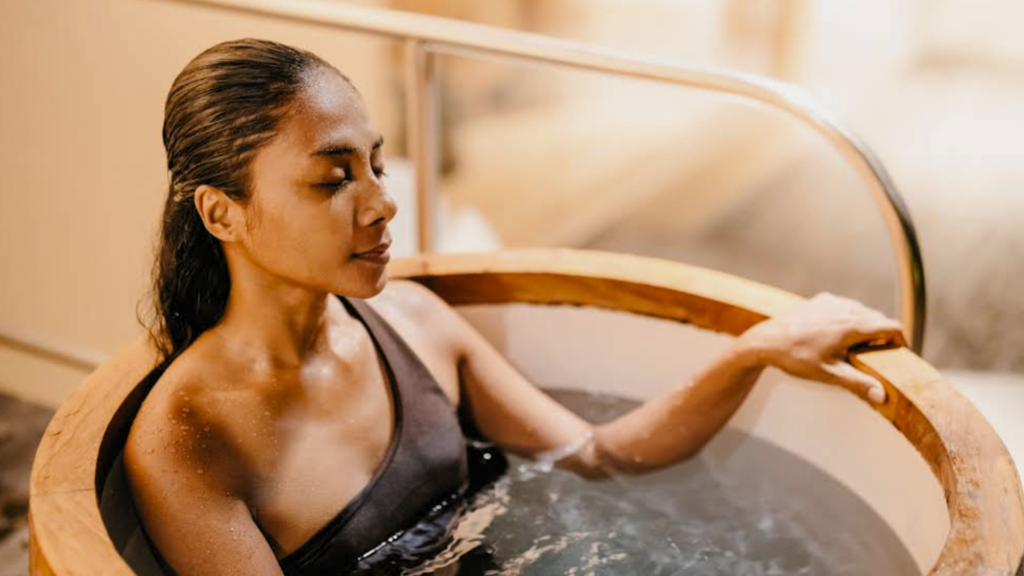
The W Hotel Seminyak in Bali had a cold plunge. On paper. In reality, the existing system could only hold water at 16°C, too warm for a genuine cold plunge experience, too unreliable to programme with confidence. After a non-disruptive retrofit with icebaths.com, the spa now maintains a constant 6°C and processes over 50 plunges per day during peak season. The upgrade was completed without closing the spa or interrupting regular treatments.
According to industry data, cold plunge installations in US luxury hotels rose roughly 15% between 2021 and 2023. For most established properties, the path to meeting that demand is more practical than expected. But the equipment is the simplest part. What changes the business is everything around it.
The revenue model shift you haven’t accounted for
Most spa directors evaluate cold plunge as an additional amenity. It’s more useful to understand it as a different revenue architecture.
Traditional spa revenue follows a 1:1 model. One therapist serves one client for one hour. Revenue per treatment room is capped by the number of appointments per day, and every additional appointment requires an additional hour of labour.
Cold plunge as hotel amenity operates on a 1:many model. A single installation serves multiple users throughout the day without requiring a therapist per session. Supervision is needed, but the labour-to-revenue ratio is different. Per-square-metre revenue potential increases because the space generates value continuously rather than in bookable appointment blocks.
This shift matters when calculating the opportunity cost of space. A treatment room running six 60-minute massages at $150 each generates $900 per day. A cold plunge in the same footprint, used by 30–50 guests as part of a $40 contrast therapy add-on, generates $1,200–$2,000, with lower incremental staffing cost.
Revenue dynamics also shift guest engagement. Cold plunge users stay longer in the spa, and longer stays correlate with higher ancillary spending. Guests who come for a plunge frequently book a massage or facial in the same visit. The physiological state after cold immersion, alert, energised, slightly euphoric, is a strong precursor to a relaxation treatment. Commercial installations tracking attachment rates typically find that cold plunge increases per-visit revenue rather than cannibalising existing bookings.
Space reconfiguration: where does it go?
For most properties, retrofit means working within an existing footprint. The most common approach is converting an underperforming treatment room or an underused relaxation area: an oversized couples’ suite that sits empty midweek, or a relaxation lounge guests pass through without lingering.
Physical requirements are more manageable than most spa directors assume, but they need upfront assessment:
Drainage. If the target space already has wet-area infrastructure, the requirement is modest. Converting a dry treatment room means waterproofing and drainage installation, the most significant construction element.
Chiller infrastructure. The chiller maintains water temperature and requires placement with adequate ventilation, typically outside or in a plant room. Routing refrigerant lines is straightforward in most spa buildings but needs planning before construction begins. Concealed or externally placed chillers eliminate noise and trip hazards in the guest space.
Water supply and waste. Cold plunges need a supply line and drain or overflow connection. In spas with existing wet areas, these are usually accessible within a few metres.
Structural load. A filled cold plunge is heavy. Ground-floor installations rarely present concerns; upper-floor retrofit requires an engineer’s assessment.
Electrical. The chiller requires a dedicated circuit. Confirm capacity before committing to a location.
At the W Hotel Seminyak, the existing basin was reused, the chiller system replaced, and the upgrade completed during normal operations. Spa directors imagining weeks of closure can recalibrate their expectations.

Menu integration and pricing
How you position cold plunge on the spa menu determines whether it generates meaningful revenue or sits as a vaguely promoted amenity.
One principle overrides all others: don’t give it away. Spas that offer cold plunge as a free, self-service amenity with no menu positioning find that it underperforms on both revenue and guest engagement. Without guided introduction and pricing, most hotel guests won’t use it. Those who do may try it once, without understanding the value. Pricing signals value. Menu placement signals intention.
Three approaches work in practice:
Standalone session. A 15–20-minute cold plunge session (including orientation, immersion, and recovery) priced at $30–$60 depending on the market. Best for spas with high foot traffic and a wellness-curious guest base.
Contrast therapy circuit. A structured sauna-cold plunge-rest cycle, priced as a guided experience at $50–$100. This positions cold plunge as part of a premium thermal journey and typically generates higher per-visit revenue and longer session times.
Add-on to existing treatments. A 10–15-minute cold plunge pre- or post-massage, offered as an enhancement at $25–$40. Drives the highest attachment rates because it requires minimal additional time commitment and positions cold plunge as an upgrade to a service already booked.
Staff retraining
Your existing spa therapists were trained in massage, facials, and body treatments. Cold plunge requires a different skill set, not a replacement but an addition.
Safety protocol. Every staff member working near the cold plunge must understand cold shock response, the 30-second danger window, contraindication screening, and emergency procedures. This is non-negotiable and should precede any guest-facing operation.
Water quality basics. Staff should understand the sanitation system (UV, ozone, or chemical), how to test water quality, and when to escalate a maintenance issue. Baseline literacy, not pool-technician certification.
Guest facilitation. Guiding a first-time cold plunge user requires different interpersonal skills than delivering a massage. The therapist needs to brief the guest on what to expect, coach them through the initial shock, and manage the transition between the plunge and subsequent treatments. Telling someone “you will gasp involuntarily in the first 15 seconds, and your breathing will speed up, but this is normal and will pass within about 90 seconds” gives them a framework for the experience. Guest facilitation is a hospitality skill as much as a technical one — the ability to make an intense, unfamiliar experience feel safe and guided.
Guest transition and experience design
This is the challenge spa directors underestimate most. Existing guests chose your property partly for the quiet, private, serene environment. Cold plunge introduces different energy patterns: gasps, laughter, conversation. Managing both experiences within the same facility is a design problem and a cultural problem simultaneously.
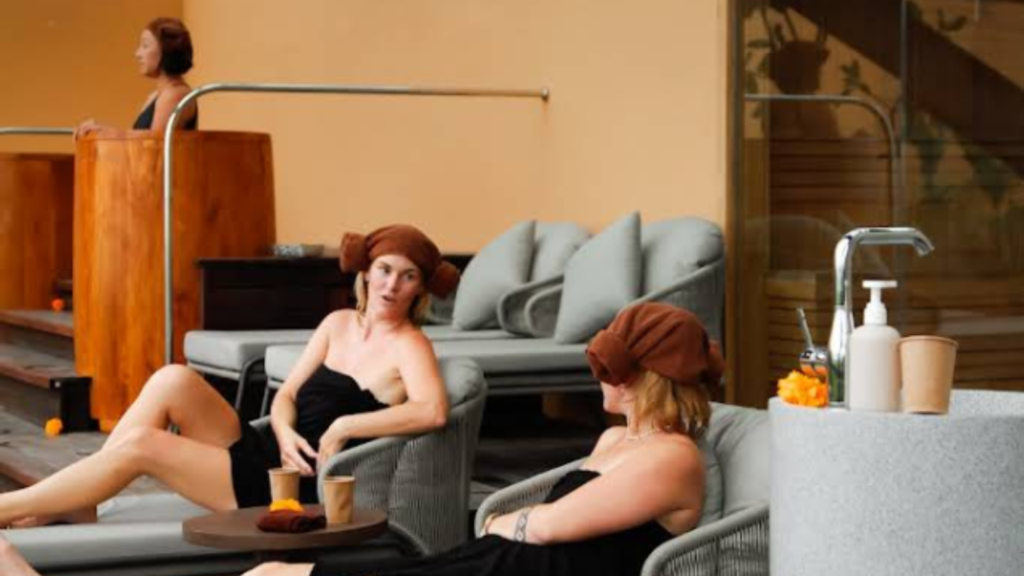
Zoning is the primary solution. The contrast therapy area should be physically separated from traditional treatment zones by a corridor, door, or clear spatial threshold. Guests moving from a massage to the relaxation lounge should not pass through the plunge area unless they choose to. The plunge zone should have its own entry, its own changing provisions, and its own ambiance. Treat it as a venue-within-a-venue.
Sound matters more than most retrofit plans account for. Cold plunge sessions produce involuntary gasps, sharp exhalations, and often conversation. If the plunge is adjacent to treatment rooms, the sound profile conflicts. Acoustic separation, solid walls, sound-absorbing materials, and white noise in treatment rooms should be part of the retrofit specification, not an afterthought.
Visibility is a strategic choice. In some properties, making the plunge visible from the spa entrance or common area creates aspiration: guests see others using it and become curious. In others, discretion is preferred. The right choice depends on your guest profile and brand positioning.
Programming as differentiation
Every spa in a competitive market is evaluating cold plunge. The installation itself will not differentiate for long. What will differentiate is how you programme around it.
Morning contrast ritual. A 30-minute guided sauna-cold plunge-breathwork session offered before main treatment hours. Captures a time slot that traditional treatments rarely fill and positions contrast therapy as a ritual, not a novelty.
Private group contrast. A bookable session for groups of 4–8, positioned as a social or corporate wellness experience. Generates premium per-session revenue and taps into the same social-bathing demand driving the broader bathhouse trend.
The insight from Doug Chambers of Blu Spas holds across the industry: equipment without programming is a bolt-on; programming makes it feel native. A spa director who installs a cold plunge and writes a standard operating procedure is doing the minimum. The commercial operator who builds a complete cold plunge programme around it, with branded language, trained facilitators, a menu position, and a seasonal calendar, is transforming their offering.
The upgrade that changes the model
Adding cold plunge to your existing spa is not a renovation. It’s a model upgrade. The equipment is the easiest part: a plunge, a chiller, some plumbing, and a few weeks of installation. Beyond the equipment, what changes the business is the shift from 1:1 treatment revenue to 1:many circuit revenue, the retraining of staff to facilitate rather than just treat, the design decisions that let two different spa experiences coexist, and the programming that turns cold water into a reason guests book your property over the one next door.
A spa director who understands this will add a cold plunge and transform their offering. The one who doesn’t will install a tub and wonder why it sits unused.


