
A single SweatHouz franchise studio averages $573,762 in annual revenue. Bathhouse, the communal social venue operating across New York City, expects to hit a $120 million run rate by end of 2026. Both are called social wellness businesses. Both offer contrast therapy in urban locations. Both are attracting serious capital. But the social bathhouse business model is not one model. It is two, and they share almost nothing in how they make money, how they scale, or how they fail.
Communal social bathhouses (Bathhouse, Othership, ARC London) and private suite franchises (SweatHouz, Melt Well, Perspire Sauna Studio) sit at opposite ends of every axis that matters to an operator: capital structure, labour model, unit economics, scaling mechanism, competitive moat, risk profile. If you are writing a cheque, signing a lease, or allocating development capital, the question is not whether bathhouses work. It is which of these two models matches your capital, your market, and your operational capability.
Why the capital is moving
The global wellness economy exceeds $6.8 trillion, but the macro number explains nothing about why capital is flowing into contrast therapy venues specifically. Sociological demand is real enough: the collapse of Ray Oldenburg’s “third places,” generational shifts away from alcohol-centred socialising, and a measurable appetite for spaces that give people a reason to be physically present together. Viterbo University’s Richard Kyte has argued that screens have displaced the physical social interaction these spaces once provided — and that the displacement is accelerating. But the demand drivers have existed for years. What changed is that institutional money started to act on them.
VICI Properties, an S&P 500 REIT, committed $150 million in preferred equity to Canyon Ranch for 15 urban wellness clubs across 10 cities. CEO Edward Pitoniak described wellness as a secular trend rather than a cycle. RSG Group, the parent company of Gold’s Gym with 6.4 million members across more than 1,000 locations, launched Heimat: a 75,000-square-foot premium wellness club at $350 per month with a Michelin-starred restaurant partnership. It signalled that the largest fitness operators on earth now see social thermal wellness as their next category.
Neither is a trend signal. Both are capital allocation decisions made by institutions with analytical resources most independent operators cannot match. Money is real. Where it belongs is the question this article answers.

Model A: The communal social bathhouse
Bathhouse co-founder Travis Talmadge told CNBC that the company expects approximately $120 million in run rate revenue by end of 2026, operating roughly 90,000 square feet across its NYC locations, with around 1,000 customers per day per location. At more than $1,300 per square foot annually, that figure exceeds most restaurant benchmarks and approaches premium nightlife economics.
Striking as the number is, it results from a specific operational architecture that is extremely difficult to replicate.
Labour is the engine. An analysis by Luxe Wellness Spaces estimated Othership’s annual revenue at $21.3 million across 152 employees, producing approximately $140,000 in revenue per employee. (These are estimates, not company disclosures, and should be treated as approximations.) One staff member can run an experience for roughly 50 paying customers simultaneously. In a traditional spa, one therapist serves one client per hour. Labour costs in the communal model are estimated at 20 per cent of revenue or less, against 50 to 55 per cent in a conventional spa. Not a marginal improvement — a category break.
But the model demands enormous upfront capital to achieve it. Bathhouse invested heavily in destination-grade design, and that investment is not cosmetic. Talmadge has described his philosophy in terms of making every guest feel “like a background actor on set.” Crowds are the product, and the architecture must make them feel cinematic rather than chaotic. Design creates social permission, which creates dwell time, which creates food and beverage spend and repeat visits. Remove the design investment and the whole revenue engine degrades.
ARC London has taken a similar approach in the UK market, building an amphitheatre-style communal lounge designed around the social thermal circuit. Architectural investment is the moat. A competitor cannot replicate a $10 million build-out by opening next door in a cheaper space.
Here is the communal model’s core tension: the same design investment that creates the moat also creates the capital barrier. Estimated build-out costs start at $5 million per location and run significantly higher in major markets. That money comes from venture capital, private equity, or high-net-worth individuals, not from SBA loans or personal savings. Othership’s Series A raised capital from investors including Felicis and Lerer Hippeau, the same type of institutional backers who funded the first wave of boutique fitness.
Revenue ceilings are high, but so are capital floors. And the margin between a Bathhouse-level success and an expensive failure is defined almost entirely by execution: design, programming, food and beverage, community cultivation, and the ability to sustain 500-plus daily visits month after month.
Model B: The private suite franchise
Jamie Weeks, the founder of SweatHouz, comes from Orangetheory Fitness, where he operated multiple franchise locations. That background is visible in every aspect of SweatHouz’s design: built to scale through replication, not through destination-grade uniqueness.
FDD data tells the story. Across 13 corporate locations, average revenue was $573,762 in 2024. Top studio: $1.2 million. Total investment ranges from $569,757 to $1,193,974, with royalties of 6 to 8 per cent of gross revenue. These are auditable numbers from a franchise disclosure document, the most reliable financial data available in the private suite segment. A caveat worth stating plainly: corporate locations may outperform franchisee-operated ones, and the $1.2 million figure is a best case. Prospective franchisees should evaluate the full revenue distribution in the FDD, not the headline number.
Labour works radically differently from the communal approach. A typical SweatHouz studio operates with one staff member per shift. Guests book a private suite online, arrive, enter their room, use the infrared sauna and cold plunge, and leave. No guided group experience, no food and beverage service, no programming to staff. Technology handles booking, access, and climate control.
Different labour, different economics. Labour costs are minimal as a percentage of revenue, but so is revenue per square foot: a 3,000-square-foot studio generating $574K produces roughly $191 per square foot annually, a fraction of the communal model’s potential. Economics work because capital requirements are proportionally lower and the model is designed for multi-unit ownership. A franchisee opens one, stabilises it, opens three more. Scaling happens not through any single unit’s revenue ceiling but through the number of units one operator can run.
Weeks has framed contrast therapy as a broader wellness habit rather than a niche recovery tool. That positioning matters because it determines the addressable market. If only athletes and biohackers want private suites, TAM stays small. If general wellness consumers adopt contrast as a routine, the franchise math changes substantially.
Competitive moats in the private suite model are different in kind. No $10 million build-out deters competitors. Defensibility comes from location density, membership lock-in through monthly subscriptions, and operational consistency across units — the same moats that drove the boutique fitness franchise boom. They work until the market saturates or a lower-cost alternative emerges.
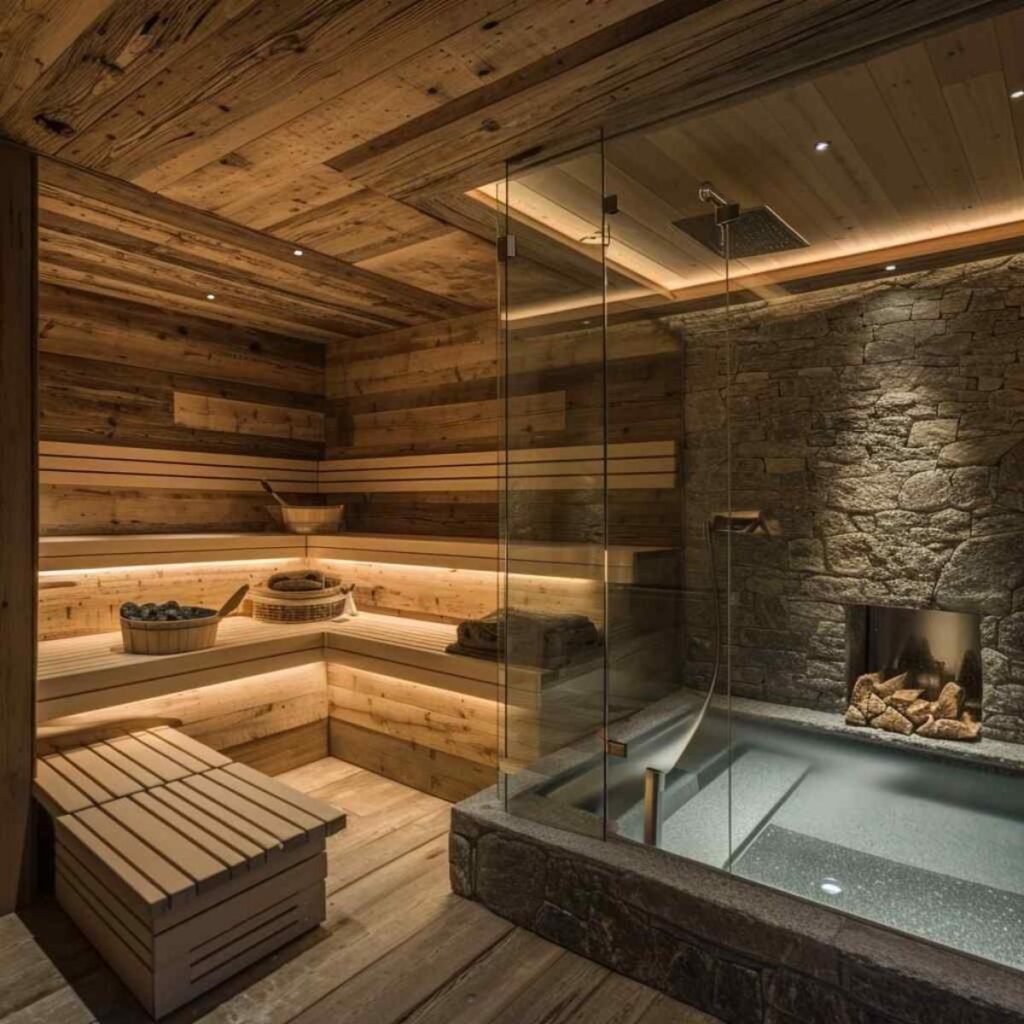
The operational layer beneath both models
Regardless of model, the same engineering realities sit beneath the revenue projections — line items that rarely appear in pitch decks but frequently determine whether a venue survives its second year.
Water quality at commercial throughput is the most underestimated challenge. A communal cold plunge serving 50 or more users per day faces microbial load that residential equipment cannot handle. Temperature recovery time between sessions directly affects scheduling capacity: if a plunge takes 45 minutes to return to target temperature after heavy use, that is revenue lost. Cold exposure triggers a norepinephrine and endorphin response that makes the experience feel genuinely different from other wellness activities — a physiological novelty that drives repeat visits and underpins the financial models of both formats. Equipment that minimises upfront capital but lacks commercial-grade filtration and cooling capacity creates a false economy. The maintenance burden and guest experience degradation compound over time, eroding both margins and brand.
Energy costs are significant and variable. Running commercial chillers, saunas, and steam rooms 14 hours a day in a dense urban environment produces utility bills that can surprise operators who modelled on residential specifications. HVAC engineering for contrast therapy venues — managing humidity from steam rooms alongside the cooling demands of plunge pools in a single building — is a specialised discipline that most commercial architects have limited experience with.
For communal venues, design integration of mechanical systems affects the guest experience directly. Concealed chillers, quiet mechanical rooms, material choices that resist humidity damage: these are not aesthetic preferences but operational requirements that affect dwell time and repeat visit rates. When the mechanical layer intrudes on the ritual layer — visible equipment, loud compressors, inconsistent temperatures — premium positioning erodes. Staff training compounds this. Hospitality personnel need structured protocols for introducing guests to cold exposure safely and confidently. A well-guided first cold plunge is often the difference between a retained member and a one-time visitor.
For private suite operators, equipment reliability across dozens or hundreds of units determines whether the model scales. A chiller failure in a single-suite studio means zero revenue for that room until the repair is complete. Franchise operators who prioritise low initial equipment cost over commercial durability discover this during their first summer of full occupancy.
Risks and competitive threats
Growth is real, but not uniform, and not without limits.
Market saturation in early-adopter cities. New York is the most visible pressure point. Multiple new bathhouse concepts, including Lore, Schwet, and The Altar, are launching alongside established players like Bathhouse and Othership. As the Culture of Bathing newsletter recently observed, the question is not whether New York can support social bathhouses but how many it can support at premium pricing before average revenue per location declines.
Home cold plunge cannibalisation. Residential cold plunge units now range from under $1,000 to over $10,000, and the market has grown rapidly. For the private suite model, this is an existential competitive threat: if a consumer can replicate the core offering at home, the value proposition narrows to convenience and consistency. Communal models are more insulated — you cannot replicate a social bathhouse experience in your garage — but not immune. Home equipment absorbs recovery-focused consumers who might otherwise be members.
Incumbent entry. RSG Group’s Heimat and VICI-backed Canyon Ranch urban clubs represent a different category of competition entirely — operators with balance sheets, membership databases, and real estate relationships that dwarf any independent bathhouse. Communal operators face direct competition for the same affluent urban consumer. Franchise operators face a squeeze from below (home equipment) and from above (premium incumbents with more amenities and deeper pockets).
Commoditisation risk. Private suite operators are particularly exposed. When the physical product is standardised, the experience deliberately minimised, and the labour component approaching zero, what prevents a cheaper competitor from offering an identical product at a lower price? Franchise moats depend on being first to density in a market, but franchise territories do not protect against non-franchise competitors.
Which model, for whom
Communal social bathhouses suit investor groups with $5 million or more per location, patience for a longer ramp, and the capability to execute a complex hospitality operation. Returns ceilings are high, and so is execution risk. At its core, this is a hospitality business that happens to feature contrast therapy.
Private suite franchises suit operators with $350K to $1.2 million per unit, multi-unit franchise experience, and a market where a communal destination venue is unlikely to be built. Returns per unit are modest, and the scaling mechanism is replication. In practice, the model is closer to a boutique fitness studio than a hospitality venue.
A hybrid space is emerging between the two. Sauna House, with estimated build-out costs of $1.5 to $3.8 million, is communal enough to create social atmosphere but standardised enough to replicate across markets. Whether that hybrid captures the strengths of both models or the weaknesses of both is the most interesting open question in the category.
Choose the communal model with franchise capital, or choose the franchise model expecting communal-scale returns, and the money disappears.
What the next three years will reveal
Three questions will resolve themselves over the next three years. Can the communal model scale beyond a handful of dense, affluent cities? Can the private suite franchise maintain pricing power as supply increases and home equipment improves? And what happens when institutional operators with real capital enter the markets where independents and franchisees arrived first?
The category will not shrink. But the competitive dynamics will sharpen in ways that reward operators who understood, from the beginning, which model they were actually in.


