Something happened, independently, on every inhabited continent. Romans built marble facilities with rooms heated to different temperatures and a specific sequence for moving through them. Finns constructed wooden saunas beside frozen lakes and cut holes in the ice. Japanese Shinto practitioners stood beneath frigid waterfalls after hours in volcanic hot springs. Russian families beat each other with birch branches in steam rooms, then rolled in the snow. Balinese Hindus bathed in cold mountain springs fed by volcanic aquifers. None of these cultures had contact with one another when their traditions began. All of them arrived at the same conclusion: alternating heat and cold does something physiologically significant to the human body.
The history of contrast therapy is at least two thousand years old and probably much older. What makes it remarkable is not the length — it is the convergence. Civilisations separated by oceans, centuries, and entirely unrelated belief systems all built environments designed for the same thermal alternation. That pattern is, quietly, among the strongest arguments the practice has.
The protocol before the name
Egyptian papyri contain the oldest written references to therapeutic bathing. Hippocrates recommended hot and cold baths for different ailments in the 4th century BCE. But it was Rome that turned thermal alternation into architecture.
By the 2nd century CE, the Roman thermae had become one of the most sophisticated public health institutions in the ancient world. Galen, whose protocols governed much of Roman medicine, prescribed a specific bathing sequence: undress, anoint the body with oil, exercise, then move through the caldarium (the hot room), the sudatorium (the steam room), the tepidarium (the warm room), and finally the frigidarium (the cold plunge), often finishing in an open-air swimming pool. This was not vaguely adjacent to contrast therapy. It was contrast therapy, codified by a physician, built into stone, and practised daily by millions of citizens across three continents.
What distinguished Rome was not just the belief but the infrastructure. At 25 acres, the Baths of Caracalla accommodated 1,600 bathers simultaneously. Rooms were arranged to move people through a temperature gradient as deliberately as a modern spa designer sequences plunge pools and saunas. Your physician told you to do it, your friends were already there, and the state paid for the building.
The tradition didn’t fade gradually — it was destroyed.
The thousand-year interruption
When the Roman Empire fragmented and Christianity consolidated authority across Europe, bathing culture became suspect. The medieval Church taught that prayer was more curative than baths, and communal nudity carried moral danger. Church authorities associated public bathhouses with disease, prostitution, and spiritual laxity. Many were shuttered. Others fell into ruin. By the early medieval period, the thermal sequences Galen had prescribed were largely forgotten in western Europe.
Within a few generations, the elaborate infrastructure that had made contrast therapy a daily civic practice had vanished. Rebuilding had to start almost from nothing, and those who took it up were not physicians or scholars. They were outsiders.
The peasant, the priest, and the professor
In the early 19th century, a young farmer named Vincenz Priessnitz was working his family’s land in the Silesian mountains, in what is now the Czech Republic. According to the accounts that made him famous, Priessnitz observed a deer with a broken leg returning repeatedly to a cold mountain spring, and watched the animal’s condition improve. He began experimenting on himself and his neighbours, wrapping injuries in cold wet compresses and prescribing cold water baths. Word spread. By the 1830s, patients from across Europe were travelling to his farmstead in Gräfenberg.
Priessnitz had no formal education and no medical training. His methods were entirely empirical: he watched, tried things, and noted what worked. Among the visitors to Gräfenberg was a young medical student named Wilhelm Winternitz, who did something Priessnitz never had: he measured the pulse rates of patients before and after cold water treatments. It was, as far as anyone can document, the first physiological testing of hydrotherapy. Winternitz would go on to establish a hydrotherapy clinic at the University of Vienna and spend decades converting Priessnitz’s folk observations into clinical data. That pivot from empirical healing to evidence-based medicine happened in a farmhouse in the mountains, because a medical student watched a peasant cure people and thought: I should measure what is happening.
But it was another figure, a generation later, who became the tradition’s most enduring character.
Sebastian Kneipp was a theology student in Munich in the 1840s, nearly dead from tuberculosis. Doctors had given up on him. Kneipp, who had grown up in poverty and worked as a weaver before entering seminary, came across a pamphlet on cold water therapy and decided he had nothing to lose. In the middle of a Bavarian winter, he began bathing several times a week in the ice-cold Danube, stripping down, submerging himself in the river, then hurrying home to pack himself into a warm bed. He repeated this for months.
He didn’t merely survive. He recovered completely. Kneipp was ordained as a priest and eventually assigned to the parish of Bad Wörishofen, where he spent the rest of his life developing a system of hydrotherapy that combined cold water immersion with warm applications, herbal medicine, exercise, and nutrition. Cold water was the primary remedy, but warmth played a deliberate, calibrated role in the cycle. Villagers came first, then visitors, then patients from across Europe. By the time of his death in 1897, Kneipp was one of the most famous men in Germany, and Bad Wörishofen had transformed from a rural parish into a destination. Germany recognised his methods as part of its intangible cultural heritage in 2015.
Together, the Priessnitz-Kneipp-Winternitz arc marks the pivot point in the Western story of contrast therapy. A peasant farmer healed people through observation. A dying priest healed himself through desperation. A scientist measured what both had done. Between them, they turned a suppressed folk tradition back into a medical discipline.
The rest of the world never stopped
While western Europe was losing and rediscovering thermal alternation, other cultures had never interrupted the practice.
Finland’s sauna tradition is at least two thousand years old. Roughly 3.3 million saunas serve a population of 5.6 million. But the sauna alone is not the tradition. What matters is the sauna and the lake, the sauna and the snow, the sauna and the hole cut in the ice. Finnish saunas have always been built near water, and the cycle of intense heat followed by cold immersion followed by rest is the fundamental rhythm of Finnish thermal culture. UNESCO recognised it as intangible cultural heritage in 2020.
In Russia, the banya carries similar cultural weight. The Primary Chronicle, a medieval account of early Russian history, records the Apostle Andrew travelling through the region and observing something he found bewildering: people heating wooden bathhouses to extreme temperatures, beating themselves with young birch branches until barely conscious, then dousing themselves with cold water and repeating the cycle. Both the birch-branch beating and the cold plunge remain central to banya culture today, more than a thousand years later.
Japanese Shinto misogi, standing beneath a cold waterfall as an act of purification, has been practised for centuries in proximity to volcanic hot springs. Shinto tradition frames the cold as spiritual cleansing, not physical therapy, but the physiological pattern is identical: intense cold after intense heat, repeated in sequence. In Bali, Hindu purification rituals have incorporated thermal bathing around natural hot springs and cold mountain rivers for over a millennium; Tirta Empul, a water temple founded in 962 AD, remains in continuous use.
No one taught the Finns about Galen. Japanese practitioners weren’t reading Priessnitz. These traditions arose independently, in different climates, under different belief systems. All of them arrived at the same physical practice: build an environment for heat, provide access to cold water, alternate between them.
The tradition produces its own science
For most of the 20th century, contrast bathing persisted in the cultures that had always practised it, while Western medicine moved on to pharmaceuticals and surgery. Cold water therapy continued in Scandinavian culture, in Japanese onsen culture, in Russian family life, but it remained folk practice to the medical mainstream.
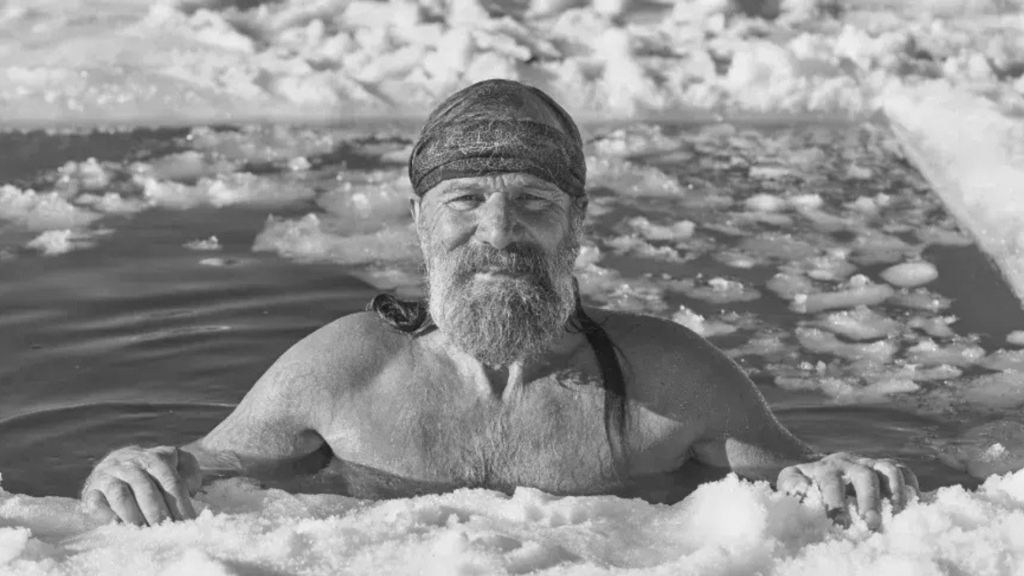
In the early 2000s, a Dutch extreme athlete named Wim Hof brought cold exposure into Western popular consciousness through spectacular feats. His influence on public awareness was enormous. But Hof was a populariser, not a researcher, and the work that would finally measure the tradition came from someone who had grown up inside it.
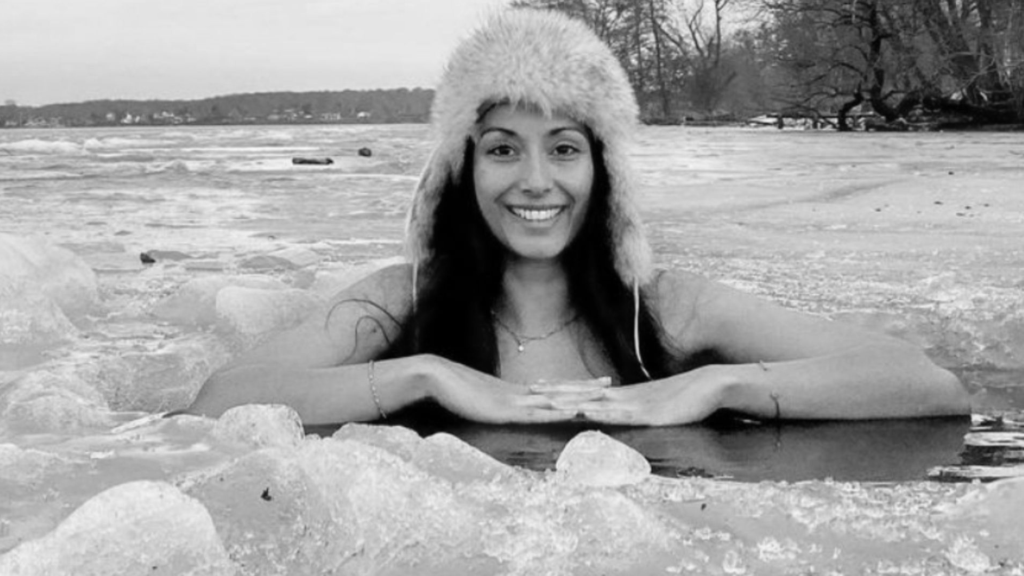
Susanna Søberg is a Danish metabolic researcher who studies thermogenesis at the University of Copenhagen. Scandinavia’s winter swimming tradition, sauna followed by cold water immersion in cycles, is so ordinary in Denmark that it barely registers as noteworthy. When Søberg designed a study comparing habitual winter swimmers with non-swimming controls, she was quantifying a practice her own culture had taken for granted for generations.
Her findings, published in Cell Reports Medicine in 2021, clearly surprised her. “We expected winter swimmers to have more brown fat than the control subjects,” Søberg said, “but it turned out that they instead had better thermoregulation.” Winter swimmers who combined cold immersion with sauna use hadn’t simply accumulated more metabolically active brown fat. Their bodies had become measurably more efficient at managing temperature shifts. The adaptation was subtler and more significant than anyone had predicted.
The study was small-scale, and much remains to be confirmed. But its significance is not purely clinical. A modern scientist, trained in molecular biology, had quantified a practice her grandparents’ generation took for granted and confirmed that the human body calibrates its thermoregulatory response to repeated thermal alternation in ways that two thousand years of tradition had always implied but never measured.
The latest chapter
When someone today steps from a sauna into cold water, or lowers themselves into a plunge pool after sitting in steam, they are participating in something that predates every wellness trend, every algorithm, and every modern protocol. They are doing what Romans did, what Finns do, what a dying Bavarian priest did in the frozen Danube.
No one invented it. It was discovered, forgotten, suppressed, revived, and finally measured. Measurement confirmed what the tradition already knew — and found something extra that nobody expected. That is the kind of evidence that takes two thousand years to accumulate.
Ready to Start?
Explore our handcrafted teak ice baths built in Bali — where traditional craftsmanship meets modern precision.