
No randomised controlled trial has ever tested an ice bath for back pain. A Cochrane review scanning the full body of cold therapy research found moderate evidence that heat wraps reduce back pain and disability, and zero trials examining cold immersion for the same condition. That gap should unsettle anyone who has read the thousands of articles confidently recommending ice baths for aching backs.
Cold therapy does work for pain, and powerfully for specific types. Post-exercise soreness, a freshly rolled ankle, a chronically stiff lower back, and an arthritic knee are four different physiological events. They respond to different interventions. Treating them as interchangeable is how people end up shivering in cold water for a condition that would respond better to heat, movement, or a conversation with a physiotherapist. What follows matches five distinct pain types to the right thermal tool.
How cold reduces pain
Cold water immersion works through three overlapping mechanisms. It slows nerve conduction velocity, so pain signals travel more sluggishly from a cooled area. It triggers vasoconstriction, narrowing blood vessels and limiting the fluid accumulation behind swelling. And as Dr Susanna Søberg of the Søberg Institute has described, cold exposure drives a sharp increase in noradrenaline and dopamine, both of which function as endogenous painkillers.
These mechanisms act primarily on symptoms — swelling, nerve sensitivity, the experience of pain itself — not on the underlying condition, which is precisely why the question of which pain you have determines whether cold is the right tool.
Pain Type 1: Post-exercise soreness (DOMS)
For this type of pain, the evidence is unusually clear. Delayed-onset muscle soreness, the deep ache that peaks 24 to 72 hours after hard training, responds well to cold, and the data is unusually consistent.
A 2025 network meta-analysis in Frontiers in Physiology pooling 55 randomised controlled trials, and a foundational 2016 meta-analysis by Machado and colleagues, converge on the same window: cold water immersion at 11–15°C for 10–15 minutes is the most effective protocol for reducing muscle soreness. Across nearly a decade, the convergence is notable: the optimal dose is not as cold as people assume. Wang’s analysis flagged that temperatures below 10°C can cause additional stiffness and discomfort. Colder is not better.
At Latitude Zero surf resort, where cold plunge units see daily use, the picture matches the research. Surfers over fifty report that a 12–15°C plunge after a morning session reduces next-day soreness enough to paddle out again, and the preference for moderate cold tracks with the evidence.
The strength-training caveat. If your primary goal is building muscle, cold immersion demands strategic timing. A 2015 study by Roberts and colleagues in The Journal of Physiology found that regular cold water immersion after resistance training blunted long-term gains in muscle mass and strength by suppressing satellite cell activation. Dr Jonathan Peake, a recovery researcher at Queensland University of Technology, has noted that the very inflammation cold suppresses is part of the adaptive process strength athletes need. Save cold immersion, then, for competition periods, deload weeks, or sessions where recovery speed matters more than long-term adaptation. On heavy training days, let the inflammation do its work.
Pain Type 2: Acute injury — cold helps, with caveats
A sprained ankle, a pulled hamstring, a collision bruise. For the first 48 to 72 hours after acute soft-tissue injury, cold immersion helps manage swelling and pain, and most sports medicine practitioners still recommend it in some form.
But the consensus is less settled than it was a decade ago. The traditional RICE protocol (rest, ice, compression, elevation) has been challenged by a newer framework known as PEACE & LOVE, developed by Dubois and Esculier (2020). Their argument: the early inflammatory response delivers immune cells and growth factors that initiate tissue repair, and aggressively icing an injury may delay that process. Some practitioners now recommend avoiding ice entirely in the first stage of healing.
The debate is genuine, and it remains unresolved. The answer likely depends on severity. For a mild muscle strain, allowing the inflammatory response to run may be fine. For a badly swollen joint that restricts movement and sleep, reducing swelling with cold in the first day or two before allowing natural healing to proceed is a pragmatic middle ground most clinicians still endorse.
Practical guidance: If you choose cold, keep sessions to 10–15 minutes, favour water immersion over ice pressed directly to tissue, and stop after 48–72 hours. After that window, gentle movement and blood flow matter more than continued cold.
Pain Type 3: Chronic back pain — heat usually wins
This is the section most readers came here for.
Chronic low-back pain — the kind that has lingered for weeks or months, that stiffens you in the morning and tightens through long desk days — is the most common pain complaint in the developed world. For this specific condition, cold immersion is not the strongest tool available. Heat is.
The Cochrane review found moderate-quality evidence that continuous heat wrap therapy provides short-term reductions in pain and disability for back pain lasting less than three months. For cold therapy applied to back pain, the reviewers found no randomised controlled trials to evaluate. That gap is not marginal. It is total.
Dr Heather Broach, a physical therapist and DPT at Hinge Health, puts it plainly: there is “no research to say definitively what’s best in what situation,” but for chronic conditions where stiffness and guarding dominate, she consistently favours heat. Her reasoning reflects mainstream physiotherapy thinking. Chronic back pain is typically characterised by muscle tension, reduced blood flow to tight tissues, and movement avoidance, all of which respond better to warmth and gentle loading than to vasoconstriction. Cold may numb the area temporarily, but it does not address the stiffness and guarding patterns that perpetuate chronic pain cycles.
Movement has stronger evidence than any thermal intervention for chronic back pain. Structured exercise, walking, yoga, and progressive loading have all outperformed passive therapies in large trials. Heat can facilitate movement by loosening tissue and reducing the anticipatory tension that makes bending feel threatening. Cold tends to stiffen muscles, which is the opposite of what a chronic back pain sufferer needs.
Where cold might still help: If your chronic back pain includes acute flare-ups with localised swelling (a re-aggravated disc issue, for example), brief cold application during the first day of the flare can manage that acute episode before you return to heat and movement. Think of it as a tactical intervention within a longer strategy that leans warm.
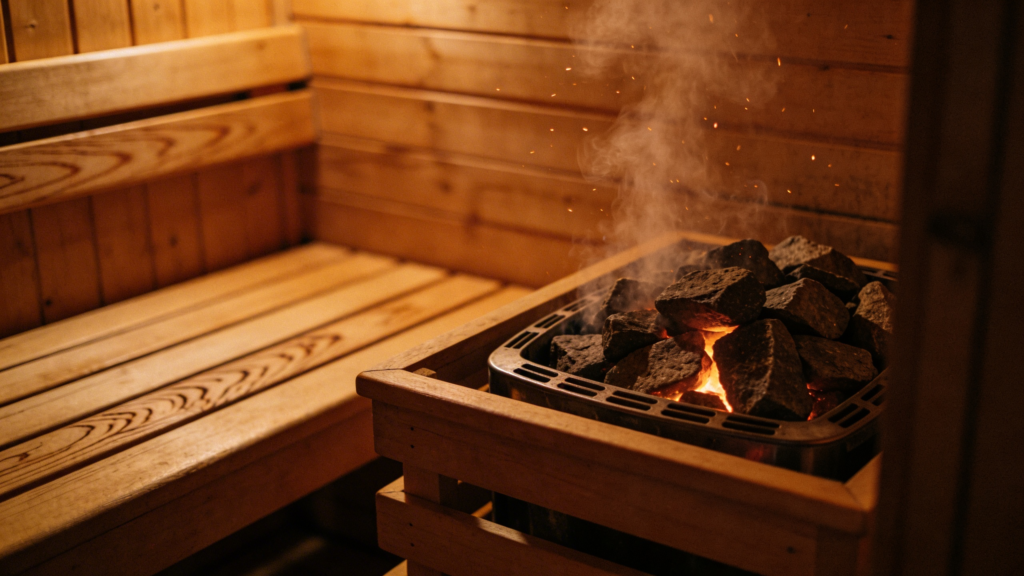
Where contrast therapy fits: Alternating between 10–15 minutes of sauna or hot water and 2–5 minutes of cold immersion at 14–15°C can offer both mechanisms. Heat relaxes muscle tissue; cold provides a brief analgesic effect. Back pain clients at facilities that pair sauna and cold plunge often find contrast therapy more tolerable and effective than cold alone.
Pain Type 4: Joint pain (knee, shoulder, hip)
For joint pain, the answer depends entirely on the cause.
Acute joint inflammation, such as a swollen knee after a football match or a shoulder flared from overuse, responds well to cold immersion. A 2022 randomised controlled trial involving 76 gout arthritis patients in Indonesia found significant pain reduction and improved joint mobility after four weeks of cold water immersion at 20–30°C for 20 minutes daily. Worth noting: the temperature was substantially warmer than typical ice bath recommendations, and still effective.
Chronic joint stiffness, the kind where knees ache on cold mornings and hips tighten after sitting, often responds better to warmth. Heat increases synovial fluid viscosity, making the joint move more smoothly, and relaxes the muscles guarding against pain.
Temperature sensitivity matters. Wang’s meta-analysis found that excessively cold water increases joint stiffness rather than relieving it, which helps explain why the Indonesian trial succeeded at 20–30°C. For older users and anyone with long-standing joint issues, moderate temperatures of 14–15°C tend to work better than extreme cold. Across cold plunge installations, roughly 70% of users gravitate toward warmer settings when given the choice, and the evidence supports their instinct.
Practical guidance: For swollen, inflamed joints, cold immersion at 12–15°C for 10–15 minutes helps acutely. For stiff, chronic joint pain, try heat first or consider contrast therapy. If joint pain persists beyond two weeks without a clear cause, see a clinician before designing your own thermal protocol.
Pain Type 5: Arthritis
Arthritis warrants dedicated treatment, which we cover in depth elsewhere. Briefly: cold water immersion shows promising early evidence for certain inflammatory types. The Indonesian gout study above is one example. A 2023 feasibility study examining cold water immersion combined with exercise for rheumatoid arthritis patients found the protocol safe and tolerable, though efficacy data remains preliminary.
For osteoarthritis, heat often provides more consistent relief for morning stiffness and chronic aching. Which approach suits you depends on your specific diagnosis, disease activity, and your clinician’s guidance.

When not to use cold immersion
Skip cold immersion if you have Raynaud’s disease or cold urticaria, uncontrolled cardiovascular conditions, open wounds or active skin infections, or peripheral neuropathy that prevents you from sensing temperature accurately. And skip it for any pain you haven’t had assessed: cold immersion manages symptoms. It does not diagnose. Persistent pain that does not improve with conservative measures — thermal, exercise-based, or otherwise — needs clinical investigation, not a colder plunge.
Practical protocols
DOMS: 11–15°C, 10–15 minutes, within two hours of training. Avoid after pure strength sessions if hypertrophy is the goal.
Acute injury: 10–15°C, 10–15 minutes, up to twice daily for 48–72 hours. Transition to gentle movement and warmth after.
Chronic back pain: Start with 15–20 minutes of heat (sauna, hot water, heat pack), then move. For contrast therapy, follow heat with 2–4 minutes of cold at 14–15°C.
Joint inflammation: 12–15°C, 10–15 minutes. Warmer temperatures (up to 20°C) can still be effective, especially for older users or sensitive joints.
The general principle: If colder isn’t feeling better, it probably isn’t. The 2025 Wang meta-analysis confirmed that excessively low temperatures cause stiffness and discomfort without improving outcomes. The right dose is the one that reduces your pain without creating new problems.
The right tool for the right pain
Knowing which conditions suit cold immersion is the whole game: cold for acute inflammation and post-exercise soreness, heat and movement for chronic back pain, contrast therapy when both mechanisms help, and a clinician when the pain outlasts the protocol. The smartest thing a cold plunge can teach you is when to choose something else.


