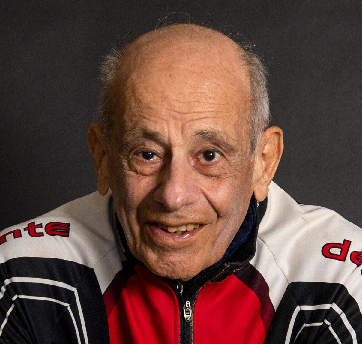
Sometime around 2014, a physician in his mid-eighties sat down and wrote a blog post that quietly contradicted something he had told the world nearly four decades earlier. There was no press conference. No journal retraction. Just Dr Gabe Mirkin, the sports medicine physician who coined the term RICE, writing on his personal website that the protocol bearing his name appeared to be wrong. “Coaches have used my ‘RICE’ guideline for decades,” he wrote, “but now it appears that both Ice and complete Rest may delay healing, instead of helping.”
That the RICE protocol is outdated is now Mirkin’s own position. The protocol he named is taught in first-aid courses, printed on physiotherapy handouts, repeated by coaches and athletic trainers worldwide. His retraction should have been seismic. Instead it landed as a blog post that most people still haven’t read, while the full story of why he changed his mind, and what his retraction does and does not mean – is far more complicated than any headline has managed to convey.
The protocol that taught the world to reach for ice
The year was 1978. Mirkin, then a practising sports medicine physician and marathon runner, published The Sportsmedicine Book, a bestselling guide aimed at the growing population of recreational athletes in the United States. In it, he laid out a four-step protocol for treating acute soft-tissue injuries: Rest the injured area. Ice it. Compress it. Elevate it. The acronym was clean, memorable, and actionable, something an athletic trainer or a panicked parent could remember in the moment.
On its face, the reasoning held. Ice numbs pain and reduces swelling. Swelling, in the thinking of the time, was something to be controlled — a byproduct of tissue damage that would slow your return to normal function if left unchecked. Within a few years, RICE had become the standard of care in sports medicine, emergency departments, and physiotherapy clinics worldwide. It spawned variations – PRICE (adding Protection), POLICE (adding Optimal Loading) – but the core assumption survived every revision: inflammation is the enemy, and ice is how you fight it. For more than three decades, almost nobody questioned the ice part seriously. Mirkin himself didn’t.
The study that changed his mind
What shifted Mirkin’s thinking was not a clinical observation but a line of research that reframed the entire relationship between inflammation and healing.
In 2010, researchers at the Federation of American Societies for Experimental Biology published a study that would become the scientific heart of the anti-ice argument. Working with mice genetically engineered to lack normal inflammatory responses, the team found that these mice could not heal their injured muscles. The inflammatory cells everyone had been trying to suppress — specifically, macrophages, the large white blood cells that flood damaged tissue in the first hours after injury — turned out to be doing something essential. They were producing insulin-like growth factor 1 (IGF-1), a protein that drives muscle repair and regeneration. Suppress the inflammation, and you suppress the repair signal.
Gerald Weissmann, then editor-in-chief of the FASEB Journal, captured the implication cleanly: “For wounds to heal we need controlled inflammation, not too much, and not too little.”
That phrase, controlled inflammation, reframes the swelling and redness and heat that follow an injury not as a problem to be solved but as a process to be respected. Inflammation, in other words, is not a malfunction. It is the first phase of repair. And ice, by constricting blood vessels and reducing blood flow to the injured area, throttles exactly the process the tissue needs most – at least in the animal models where this has been tested.
What Mirkin actually said — and what he still recommends
The retraction, when it came, was characteristically direct. On his website, Mirkin acknowledged that the research had moved against him. He noted that ice could delay healing by reducing the inflammatory response and that complete rest might do the same by depriving the injured tissue of the mechanical loading it needs to remodel properly.
But here is the part that gets lost: Mirkin did not say ice was useless. He wrote that brief icing (ten minutes on, twenty minutes off) could still be applied for pain relief immediately after an injury. His objection was to the prolonged, repeated icing that his protocol had been interpreted to endorse, and to the assumption that reducing inflammation was a desirable goal in the first place.
Without that distinction, the viral version of this story flattens everything into a binary. Ice is bad. RICE is dead. The man who invented it said so. In reality, even the man who invented it still reaches for ice in the first moments after an acute injury. He just no longer believes it should be the default treatment beyond that initial window.
By 2020, the professional landscape had shifted to match. A widely cited editorial in the British Journal of Sports Medicine proposed a new framework called PEACE & LOVE, which removed ice from the protocol entirely, not merely deprioritising it.
The counterargument
Online, this story is clean, satisfying, and makes the sharer look informed. The problem is that it overshoots the evidence.
Paul Ingraham, a former registered massage therapist who runs PainScience.com, one of the most rigorously sourced independent sites on musculoskeletal health, has spent years arguing against the “icing is dead” narrative. His position is not that Mirkin was right. It is that Mirkin’s retraction, and the wave of content that followed it, rests on evidence far more indirect than it appears.
But that FASEB study was conducted on genetically modified mice that lacked inflammatory capability entirely – a condition with no parallel in a person icing a sprained ankle for fifteen minutes. The leap from “mice without any inflammatory response cannot heal” to “ice on a human injury meaningfully impairs healing” is a large one, and the clinical evidence to bridge it doesn’t exist. Systematic reviews of icing for soft-tissue injuries have consistently found that ice has little measurable effect on recovery timelines, positive or negative. Honestly read, the evidence does not show that ice harms healing. It shows that we don’t have good human data demonstrating it does much of anything beyond temporary pain relief.
Even Mirkin’s own current position, short-term icing for pain is acceptable, is more moderate than the content his retraction inspired. Ingraham describes the viral version as “speculative” reasoning that has been mistaken for established fact. The mechanism is plausible. The animal evidence is suggestive. But the clinical proof that icing a human injury delays healing in any measurable way has not been produced.
Where the evidence stands now
In 2024, a critical review in the British Journal of Sports Medicine, led by Sébastien Racinais and a team of authors connected to the IOC and Olympic sports medicine, offered the most rigorous attempt yet to resolve this question. They screened 452 studies; only one human study and twenty-six animal studies met their inclusion criteria for examining whether cryotherapy affects tissue healing after acute muscle injury.
Their conclusions were measured. Ice may reduce pain in the first six hours after an injury. It should be used with caution beyond twelve hours. There is no human evidence that cryotherapy limits secondary tissue damage or accelerates regeneration. Broader reviews support a similar position: ice has a role in the acute stage as an analgesic, but its influence on healing itself remains unproven in either direction.
This isn’t a ringing endorsement of RICE. But it isn’t the decisive debunking that social media has made it, either. Ice does not help you heal, no human evidence supports that claim. It does not measurably prevent you from healing either. It does reduce pain in the short term. Whether that trade-off is worth it depends on the injury, the timing, and what you are trying to achieve.
The distinction that changes everything
Everything discussed so far – Mirkin’s retraction, the FASEB study, the Racinais review, the PEACE & LOVE framework, concerns icing an acute injury. A localised application of cold to damaged tissue in the hours after trauma. The question is whether that application helps or hinders the tissue’s inflammatory repair process.
Cold water immersion after exercise is a different act entirely.
When a person sits in a cold plunge at 6°C after a training session, they are not trying to suppress the inflammation around a torn ligament. They are exposing the whole body to a systemic cold stimulus that affects the cardiovascular system, the autonomic nervous system, perceived recovery, sleep quality, and a range of hormonal and neurological responses that have nothing to do with localised tissue repair. The evidence base is different. The mechanisms are different. The intent is different.
The gap between a 16°C hotel plunge pool and a 6°C purpose-built ice bath is not cosmetic, it represents a fundamentally different physiological experience. And the gap between either of those and a bag of frozen peas held against a swollen knee is wider still. The RICE retraction speaks to one narrow question, whether suppressing acute inflammation at an injury site aids healing, and even on that question, the evidence is less conclusive than the headline suggests. It says nothing about the broader practice of cold water immersion for recovery, stress adaptation, or wellbeing.
A cleaner way to think about cold
Mirkin’s story is worth telling properly because it illuminates something beyond its own subject. A single protocol, coined in a bestselling book in 1978, became so embedded in medical and popular culture that even its inventor’s retraction could barely dislodge it.
A useful position sits quieter than either extreme. Ice can reduce pain after an acute injury, and it is reasonable to use it briefly for that purpose. It’s not a healing tool, and prolonged icing interferes with the inflammatory process the body depends on to rebuild. Meanwhile, whole-body cold water immersion after exercise operates on different physiology entirely, with its own evidence base and its own outcomes.
The body’s relationship with cold is not a single question with a single answer. It never was. The mistake was thinking a four-letter acronym could contain it.


