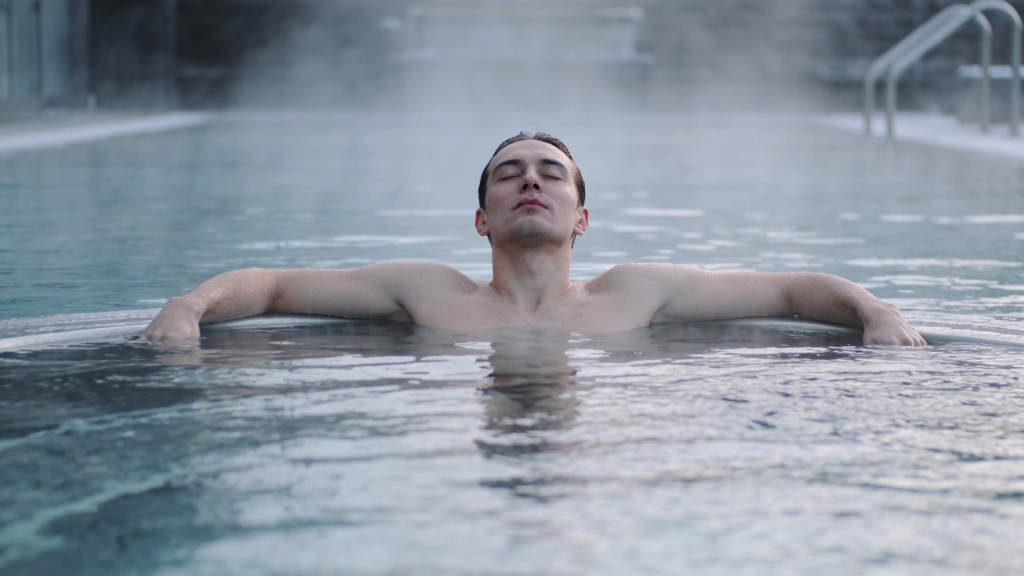
We sell ice baths. We have app data from thousands of sessions, customer stories from Bali to Helsinki, and a front-row seat to every viral claim that circulates about cold water immersion. Some of those claims help people. Some are wrong. And a surprising number take a real study, strip it of context, and turn it into something the original researchers wouldn’t recognise.
Here are 10 ice bath myths we see repeated constantly.
1. “Ice baths reduce inflammation”
This is the big one — and it’s backwards. A 2025 meta-analysis published in PLOS ONE by Cain and colleagues makes this clear: cold water immersion causes a short-term increase in inflammatory markers at one hour post-immersion. Not a decrease — an increase.
Intuitively, it makes sense: cold numbs, cold reduces swelling, therefore cold must suppress inflammation. But Dr Ben Singh, a researcher at the University of South Australia involved in the review, has explained that the acute inflammatory response is likely the mechanism through which cold exposure triggers adaptation: the body’s alarm system firing briefly, prompting a cascade of recovery processes downstream.
The ice bath doesn’t work by shutting inflammation down. It works, at least partly, by provoking it, a controlled stress that the body learns from. The people sharing “cold kills inflammation” infographics have the direction of effect reversed.

2. “Colder is better”
Our app tracks the temperature users set for their sessions. Roughly 30% choose 3–4°C, close to the lowest the units go. The logic is straightforward: if cold is good, colder must be better.
But the evidence says otherwise. A 2025 network meta-analysis in Frontiers in Physiology by Wang, Wang, and Pan found that 10–15 minutes at 11–15°C produced the strongest recovery effects for delayed-onset muscle soreness. This is one of the clearest findings in cold exposure research. The optimal dose turned out to be considerably warmer and shorter than the culture celebrates.
There’s a visible gap between what the evidence supports and what the culture rewards. Hospitality venues often set plunges to 6–8°C because it feels impressive. Social media celebrates the coldest possible dip. But the dose that works best is considerably warmer than the dose most people are chasing. At 3°C, the willpower is real. The additional physiological benefit is not.
3. “Cold plunges boost your immune system”
This one persists because cold exposure does trigger measurable immune-related changes acutely. But the Cain et al. meta-analysis specifically examined immune function outcomes and found no consistent evidence that cold water immersion improves immune markers in a lasting way.
What the evidence does support is a reduction in perceived stress and improvements in self-reported sleep quality, both of which affect immune function over time. So there may be an indirect relationship. Cold exposure may support the conditions under which your immune system functions well, rather than boosting it directly.
4. “A cold shower is basically the same thing”
It depends on where you live. A “cold shower” in Bali might run at 26–28°C. A cold shower in northern England in January might be 8°C. The temperature is uncontrolled, varies by season and geography, and is impossible to replicate between sessions.
But the more fundamental difference is immersion. Submerging your body to the chest or neck creates hydrostatic pressure that compresses tissues evenly and increases venous return, effects a shower stream hitting one body part at a time cannot replicate. A cold shower is a cold stimulus. A cold bath is a cold stimulus plus consistent pressure plus a controlled, measurable temperature.
5. “Longer sessions are more effective”
François Haman, a cold exposure researcher with more than two decades in the field, put it cleanly in an NPR interview:
“If somebody says 10 minutes in the cold is good, then we’ll do 20 minutes because it’s going to be twice as good. Physiology doesn’t work that way.”
We’ve seen this play out in practice. At a partner venue in Helsinki, a competitive duration challenge led to participants pushing well past sensible exposure times, and the event was restructured after it became clear that incentivising longer sessions created risk without added benefit. The Wang et al. 2025 meta-analysis confirms this: the optimal window for recovery sits around 10–15 minutes. Beyond that, you aren’t collecting additional benefit. You’re just cold.
6. “Ice baths kill your gains”
This one has a kernel of truth, which is what makes it sticky. A 2024 meta-analysis in the European Journal of Sport Science by Piñero and colleagues found that cold water immersion after resistance training modestly blunted muscle hypertrophy, but the effect size was small (−0.22) — crucially, it had no measurable impact on strength gains. Study quality across the included trials was rated fair to poor.
Here’s the detail that rarely makes it into the Instagram caption: every study in the analysis tested cold water immersion immediately after the training session. The concern applies to a specific protocol, plunging right after lifting, not to cold exposure in general. If you train in the morning and take your ice bath in the evening, or on a rest day, the available evidence doesn’t support a meaningful interference effect. The practical takeaway is simpler: don’t plunge immediately after a hypertrophy session if maximising muscle growth is your primary goal.
7. “Cold water immersion increases dopamine by 250%”
The stat is real. The context it’s shared in almost never is.
It comes from a 2000 study by Šrámek and colleagues published in the European Journal of Applied Physiology. They measured plasma dopamine and norepinephrine during head-out immersion at 14°C, a moderate cold temperature, sustained for one full hour. Dopamine rose 250%. Norepinephrine rose 530%.
One hour. Not the two or three minutes people spend in a plunge pool after hearing this stat on a podcast. The study used a single measurement protocol in a small cohort, and the results have not been cleanly replicated at shorter durations. When someone tells you that your five-minute ice bath will spike dopamine by 250%, they are citing a study whose conditions look nothing like the experience they’re describing. Brief cold exposure does produce neurochemical effects worth studying. They’re just not this number, applied this way.
8. “The inventor of RICE changed his mind, so ice is useless”
Gabe Mirkin did change his mind. In 2014, the physician who coined RICE (Rest, Ice, Compression, Elevation) wrote on his own website: “It appears that both Ice and complete Rest may delay healing, instead of helping.” That retraction was genuine and worth taking seriously.
But the leap from “icing an acute injury immediately may delay healing” to “ice baths are useless for recovery” skips several steps. Mirkin was talking about applying ice packs to fresh injuries, a specific clinical context. Cold water immersion for post-exercise recovery involves different mechanisms (whole-body exposure, hydrostatic pressure, central nervous system response) and a different body of evidence. Conflating the two is like citing a paper on aspirin to make a claim about anaesthesia.
9. “Everyone should try an ice bath”
Most people can use cold water immersion safely. But “most” is not “everyone,” and the distinction matters.
One of our customers in Bali, Bobby Bikol, an Indonesian musician, developed a persistent skin reaction after using his ice bath. It took roughly a month to connect the symptoms to cold exposure. He was eventually identified as having cold urticaria, a condition affecting around 0.05% of the population annually, where cold triggers hives, swelling, and in some cases systemic reactions including low blood pressure and fainting. We took his unit back.
Beyond cold urticaria, cardiovascular risk is the more common concern. Dr Jorge Plutzky, a cardiologist at Brigham and Women’s Hospital, has stated plainly: “I would caution against it for anyone with a cardiac history.” Cold immersion triggers a rapid rise in heart rate and blood pressure. For healthy adults, this is a manageable stress. For people with undiagnosed heart conditions, uncontrolled hypertension, or Raynaud’s disease, it presents a real risk. This isn’t a hedge. It’s a boundary.
10. “Cold therapy is a new wellness trend”
The Edwin Smith Papyrus, dated to approximately 3500 BCE, describes cold as a therapeutic tool. Ancient Greek physicians used cold water for both treatment and socialisation. A 2022 narrative review by Broatch and colleagues traces the documented use of cold therapies across millennia, from Roman baths to Scandinavian sauna culture to modern sports science.
What’s new is not the practice. It’s the accessibility: the ability to set a precise temperature in your garden or your hotel spa, to control dosing, to collect data. Cold exposure has been part of human culture for at least 5,500 years. What we’re living through is a chapter, not the beginning.
The more interesting truth
Every myth on this list follows the same pattern: a real phenomenon gets simplified, stripped of context, and amplified until the claim circulating online no longer resembles the evidence it was built from. The correction is never “cold therapy doesn’t work.” It’s that the way it works is more specific, more conditional, and far more fascinating than the version that goes viral.
Cold water immersion doesn’t suppress inflammation; it provokes a brief inflammatory response the body learns from. It doesn’t require extreme cold; moderate temperatures outperform the punishing ones. The dopamine stat everyone quotes comes from an hour-long protocol almost nobody replicates. Knowing this doesn’t diminish the practice. It significantly sharpens it. The best reason to get into cold water is the evidence as it actually stands, not a simplified version of it that falls apart the moment someone checks.